course

course

3.7
A planned series of actions that shows what to do
  • noun
  • /kɔrs/
translation icon : curso
  • Over the course of the semester, students will develop their skills in writing.
  • course of action
  • change course
  • alter the course

Let's make our own history, our own course, our own new society.

Examples

  • There were two cases of suspected infection that improved after a course of intravenous antibiotics.

    Academic text (2015)
  • Under the traditional model, providers typically determine a course of treatment without consulting patients.

    Academic text (2017)
  • Access to loans allowed students to take additional courses each semester and over the summer.

    Academic text (2015)
  • Students at the school participated in vocational courses, the curriculum of which included work at the sanitarium.

    Academic text (2017)
  • Students answered 4 items specific to the focal course using a 5-point Likert scale.

    Academic text (2011)
  • The team followed a strict course of action to ensure project success.

  • She decided on a new course for her career after much consideration.

Synonyms

course of action
vscourse
70 3.6

A plan of steps to reach a goal

is broader, covering any connected progression not only goal-directed plans

Antonyms

31 3.7

A state in which things or places are not arranged

19 5.4

A lack of any predictable order or plan

Idioms

1.0

To show something is obvious and to say yes or give permission

37 3.8

Moving forward as planned to reach a goal

14 4.7

A normal thing to expect in a situation

in due course
  • Formal
12 3.5

At the right time after some waiting

To make a big lasting change to what happens next

Likely to lead to a conflict or failure if nothing changes

Done regularly without extra thought

Compounds

126 1.0

An area of land with grass and holes where people play golf

A plan of steps to reach a goal

28 1.3

The main dish served after a starter and before dessert

A situation likely to lead to conflict between people or groups if not changed

17 3.4

A short course that teaches important skills quickly

The way important events and changes happen over time in the past

A short course that reviews and updates what people already know

Something that people expect to happen without special effort

A change to a plan to make it work better

A course where teachers send lessons and students return work by mail or online for home study

A set of classes in a subject that lead to a qualification or degree

A move to a different direction physically or in plans

A course that all students must take to finish a program

2 3.4

A list of classes a college or university offers with times, requirements, and descriptions

course credit
  • Specialized
1 3.4

An official record that a college gives for a completed course toward a degree

A course offered by a college for adults, often in the evenings

A course a student chooses instead of a required class

main course
  • Archaic
1 9.9

A large square sail set on a ship's main mast to catch the wind

A set of lessons in a subject to teach skills or knowledge

1 6.5

A golf course by the sea with sandy ground, small hills, and few trees

A series of talks about one subject that teachers give at a university or college

A scheduled class that is part of a course

7.9

A layer of waterproof material at the bottom of walls near the ground that stops moisture rising

A layer of waterproof material in a wall near the ground that stops water rising


Happening in a normal, expected way

mizzen course
  • Specialized
9.9

The lowest sail on the mast at the back of a sailing ship

A short class that introduces new people to a place or group

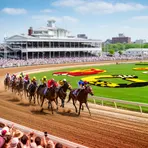
A racetrack in Baltimore that hosts the Preakness Stakes

weeder course
  • Jargon
8.2

A hard class that many students fail, making some leave the program

How Structured

system
2.6
program
  • US
2.5
procedure
688 3.7
course
3.7
sequence
428 3.2
improvisation
29 5.6

Surface Forms

course singular
courses plural

Etymology

Course (series of actions) comes from the same Latin cursus and currere, 'to run'. That's why the word means the way events or actions 'run' or move forward over time.