
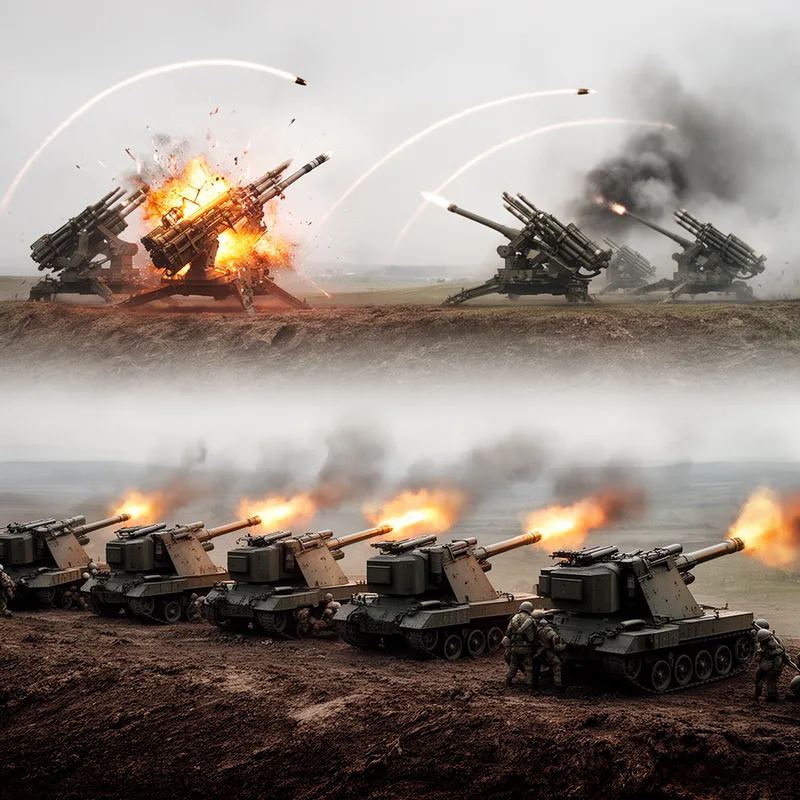
counterbombardment
- noun
- /ˌkaʊntərbɑːmˈbɑːrdmənt/
- Specialized
- The artillery unit launched a counterbombardment to suppress the enemy's heavy guns.
Examples
-
The military initiated a counterbombardment to neutralize enemy artillery.
-
Successful counterbombardment can significantly reduce the effectiveness of opposing forces.
-
During the battle, both sides engaged in fierce counterbombardment operations.
-
After the enemy's attack, a counterbombardment was necessary.
-
The artillery unit launched a counterbombardment to suppress the enemy's heavy guns.
-
During the battle, both sides engaged in fierce counterbombardment operations.
-
Successful counterbombardment can significantly reduce the effectiveness of opposing forces.
Synonyms

 28
4.3
28
4.3

An attack made in response to an enemy's attack to regain lost ground
 2
6.8
2
6.8
An attack by an army in response to an enemy attack

Fire from big guns aimed at enemy guns to destroy them
Gunfire aimed to destroy enemy weapons or positions
Fire from guns aimed at enemy mortar positions to destroy or stop them

A hit given back after an attack
Antonyms


How Forceful
849
3.0

- Specialized
47
7.0
51
8.3
- Specialized
Surface Forms
Morphology
counterbombardment = bombardment (transparent) = counter + bombard + ment
A productive prefix 'counter-' meaning 'in opposition to' added to the noun 'bombardment', forming a straightforward meaning 'an attack to oppose or neutralize an enemy's bombardment.'
Etymology
Counterbombardment breaks into counter- meaning 'against' and bombardment, from bombard (like the word bomb) meaning a 'heavy attack' with guns or explosives. So counterbombardment is an attack made 'against' the enemy's guns or weapons to destroy them or stop them from working.