

countenance
 15
7.2
15
7.2

- noun
- /ˈkaʊntənəns/
- Formal
- His countenance revealed his disappointment even when he tried to hide it.
- a fierce countenance
- pity in his countenance
- a human countenance
Loading YouTube…
Watch on YouTubeIt is as much its countenance, its face, as its mask, which it can lay aside.
- It is as much its countenance, its face, as its mask, which it can lay aside.
- The Minna is the look, the the countenance, the cast.
- Going back again to this idea of this, I believe that Mike, my countenance, look it up, staff, look up countenance for me.
- And then it's got this description of his face being fallen or sometimes an older English translations countenance being fallen face, his face being fallen.
Examples
-
The artist captured her serene countenance in the painting, reflecting her calm nature.
-
"And a fine day too, judging by your countenance," Barberini replied.
Fiction book (1998) -
May he turn his countenance to you... and give you peace.
-
God lift up His countenance to you and give you peace.
-
The Lord, lift up his countenance upon him and give him peace.
-
May the Lord lift up His divine countenance upon you... and give you peace.
-
And Washington replied, no, my countenance never yet betrayed my feelings.
-
To the delight of all, his normally calm and pleasant countenance was bright red with indignation.
Fiction book (1992) -
He's not so dashing as Willoughby, but he has a pleasing countenance.
-
Even if you forge my name, you'll never forge this amiable countenance.
Synonyms
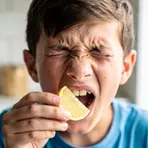 ∞
1.0
∞
1.0
The expression that shows a person's feelings
 ∞
1.0
∞
1.0
An expression on the face that shows a feeling
 315
2.5
315
2.5
A look on the face that shows what someone feels or thinks
 30
3.4
30
3.4
The look on someone's face that shows their feelings
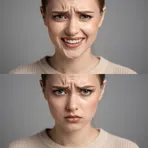 24
1.8
24
1.8
A look or movement on the face that shows feelings
 14
7.9
14
7.9
A person's face, especially their expression
 3
9.1
3
9.1
A person's look and behavior that shows their feelings or character
 2
9.9
2
9.9
Facial features that seem to show a person's character

An expression on a person's face that shows their feelings
How Expressive

Surface Forms
Etymology
Countenance comes from an old idea meaning 'to contain' or 'hold', the same root as contain, and it originally meant a person's 'bearing' or how they hold their face. So countenance now means someone's face or expression that shows their mood.