

physiognomy
 2
9.9
2
9.9

- noun
- /ˌfɪziˈɑːɡnəmi/
- Formal
- In fact, despite her decidedly goblinlike physiognomy, she might have been considered quite attractive.
- physiognomy and costume
- physiognomy and gesture
- physiognomy and posture
Loading YouTube…
Watch on YouTubeThe opinion of the person engaging in physiognomy.
- The opinion of the person engaging in physiognomy.
- So this is a larger point than just about phrenology or or physiognomy.
Examples
-
She's a dedicated student of physiognomy.
-
His entire physiognomy changed.
-
Many of my mother's people had that physiognomy, that nighttime coloring, especially her father.
Fiction book (1998) -
The repetitive portraits that stress physiognomy signal the connection between Murad's characteristics and those of his ancestors.
Academic text (2013) -
The wide range in age, physiognomy, and gesture conveys an individuality of response among the listeners.
Academic text (1998) -
The artist focused on the subject's physiognomy, capturing the unique features that reflected his character.
-
In her book, she analyzed how physiognomy could reveal deeper insights into a person's personality.
-
Many believed that one's physiognomy could indicate their emotional state, influencing how others perceived them.
Synonyms
 ∞
1.0
∞
1.0
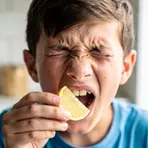
The expression that shows a person's feelings
 388
1.8
388
1.8
The way a person or thing looks to other people
 30
3.4
30
3.4
The look on someone's face that shows their feelings
 15
7.2
15
7.2
A person's face or the expression on it that shows mood
 14
7.9
14
7.9
A person's face, especially their expression
Surface Forms
Morphology
physiognomy = physio + gnomy
The word is built from Greek combining forms (physio- + -gnomy) that are not productive or familiar to typical B1 learners, so the meaning cannot be reliably derived from the parts.
Etymology
The word physiognomy comes from Greek parts physis ('nature'), which you can see in the English word physical, and gnōmē ('judgment'). So, physiognomy is about reading a person's face to guess their character.