
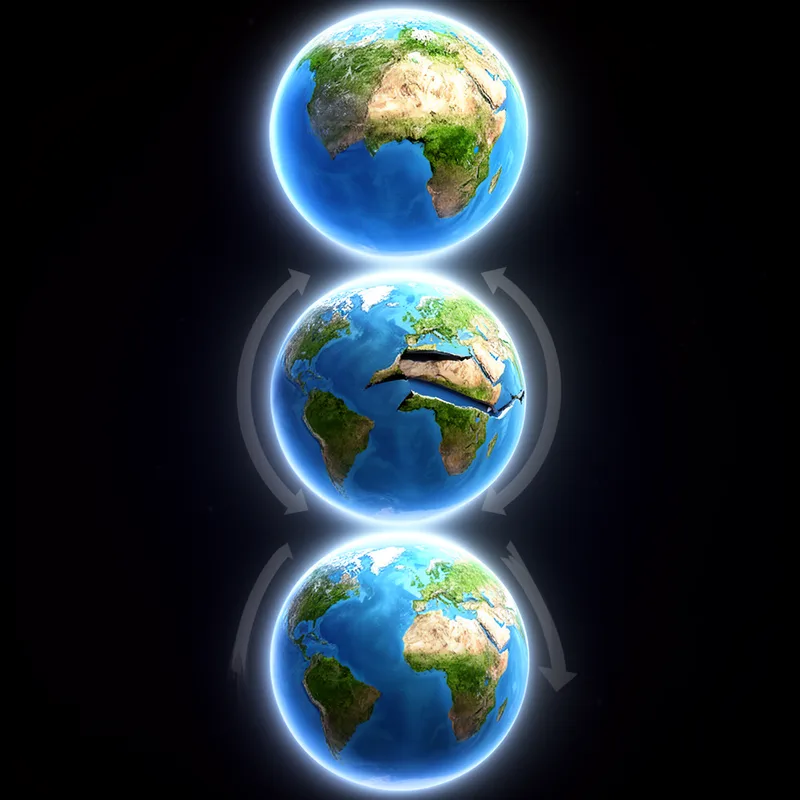
continental drift
 4
4.8
4
4.8

- noun
- /ˌkɒntɪˈnɛntl drɪft/
- Specialized
- I don't believe that anyone rejects the theory of continental drift today.
- continental drift theory
- continental drift and tectonics
Loading YouTube…
Watch on YouTubeBut of course then when continental drift came along, this was a much slower process where Hapgood was envisioning something much faster.
- But of course then when continental drift came along, this was a much slower process where Hapgood was envisioning something much faster.
Examples
-
Flow-on effects could happen to the Earth's geomagnetic dynamo, continental drift, the Van Allen belts, and who knows what else.
Blog text (15) -
Factors such as continental drift have led to drastic ecological changes in coastal marine environments.
Academic text (1996) -
Continental drift is but one example of the connection between maps and science.
Academic text (1990) -
He stated with a straight face that continental drift was now generally accepted as firm science.
Blog text (21) -
The Earth's crust then appeared, and the process of continental drift began.
Blog text (28) -
Today, plate tectonics, which explains continental drift, is a full-fledged physical theory with abundant observational support.
Academic text (1990) -
Does the Earth's continental drift depend on the lubricating effects of the Moon's tidal squishing?
Blog text (15) -
Scientists study how continental drift has shaped the Earth's continents over millions of years.
-
The theory of continental drift explains that the continents move slowly due to plate tectonics.
-
Geologists believe that continental drift played a significant role in the formation of mountain ranges.
Synonyms
 1
4.9
1
4.9
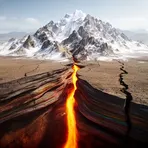
Movement of large parts of the Earth's outer layer that makes earthquakes or mountains
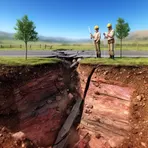
Movement of the Earth's top rock layer that changes the land and causes earthquakes
How Extensive

Surface Forms
Morphology
The noun combines 'continental' (relating to a continent) with 'drift' (a slow shift), so the meaning 'slow movement of continents' is directly derivable from its parts. Although it's a scientific term, the compositional pattern is straightforward and cross-linguistically common, so a B1 learner who knows the constituents would likely understand it.
Etymology
Continental drift paints a simple picture: the word continental points to the large land areas and drift suggests they slowly move, like big rafts on a calm sea. That's why it means 'the slow movement of the Earth's continents over a long time'.