

conjugate
- adjective
- /ˈkɒndʒʊɡeɪt/
- Specialized
- Conjugate meningococcal vaccines have significant advantages over polysaccharide vaccines and should be the preferred option for travelers.
Loading YouTube…
Watch on YouTubeRemember that the conjugate axis is the axis that my Co vertices lie on, and it's also perpendicular to.
- Remember that the conjugate axis is the axis that my Co vertices lie on, and it's also perpendicular to.
Examples
-
The vaccine that protects against Haemophilus influenzae type B (Hib) is a conjugate vaccine.
Academic text (2015) -
So this is acid here and the conjugate base is water.
-
So you got to multiply by the conjugate to get your radical off the bottom.
-
So we'll have that number of moles of conjugate base that's formed.
-
In the experiment, we observed that the conjugate acids and bases reacted predictably when combined.
-
Chemists often study the properties of conjugate pairs to understand their interactions.
-
Analyzing conjugate molecules can reveal important information about chemical reactions in living organisms.
Synonyms


 1
5.2
1
5.2
Joined together so they act or work as one
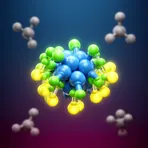
Attached to another molecule or chemical group

Two items joined together physically, like vehicles or parts used as a pair

Joined by several people or groups to act as one

Connected so they form one longer object
Compounds

- Specialized
1
7.7
A complex number with the same real part and the imaginary part with the opposite sign

- Specialized
One of two liquid layers that form when two partly mixed liquids separate, each layer rich in a different liquid
Surface Forms
Morphology
conjugate = con + jug + ate
Although analyzable as con- + jug + -ate, the combining form 'jug' is not a standalone English word and the specialised meaning 'paired or coupled' is not transparently derived for an average B1 learner.
Etymology
Conjugate comes from the Latin parts con- 'together' and jugare 'to yoke', so picture two things joined like animals under one yoke. That's why conjugate can mean 'joined in pairs', as in leaves that come as a matched pair.