

conjugate solution
- noun
- Specialized
- The chemical analysis revealed one conjugate solution was rich in ethanol, while the other was rich in water.
Examples
-
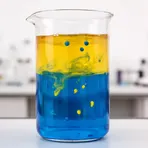
At a certain temperature, the system forms two conjugate solutions that separate into distinct layers.
-
A conjugate solution forms when oil and water are mixed.
-
Scientists use conjugate solutions to study the solubility limits of immiscible liquid pairs.
-
The chemist explained the properties of a conjugate solution in class.
-
At a specific temperature, two distinct conjugate solutions form, each enriched with different components.
-
In experiments, researchers observed that the conjugate solutions created clear boundaries between the liquid phases.
-
The lab reported that one conjugate solution contained a higher concentration of the solute than its counterpart.
Synonyms
 2
9.9
2
9.9

One of two liquid layers that separate and each holds some of the other
Surface Forms
Morphology
This is a domain-specific chemistry term whose precise meaning (the two separate liquid phases formed by partially miscible liquids) requires technical background. Even if a B1 learner knows 'solution' and a vague sense of 'conjugate' as 'paired' or 'related', they would not be able to derive the specialized two‑phase meaning from the parts alone. Therefore the expression is not transparently compositional for general learners.
Etymology
The term conjugate solution comes from a word meaning 'joined' and gives the image of two matching liquid partners. When two liquids partly mix they can split into two separate layers that form a pair, so each conjugate solution is one of those linked layers, one rich in one component and the other rich in the other.