
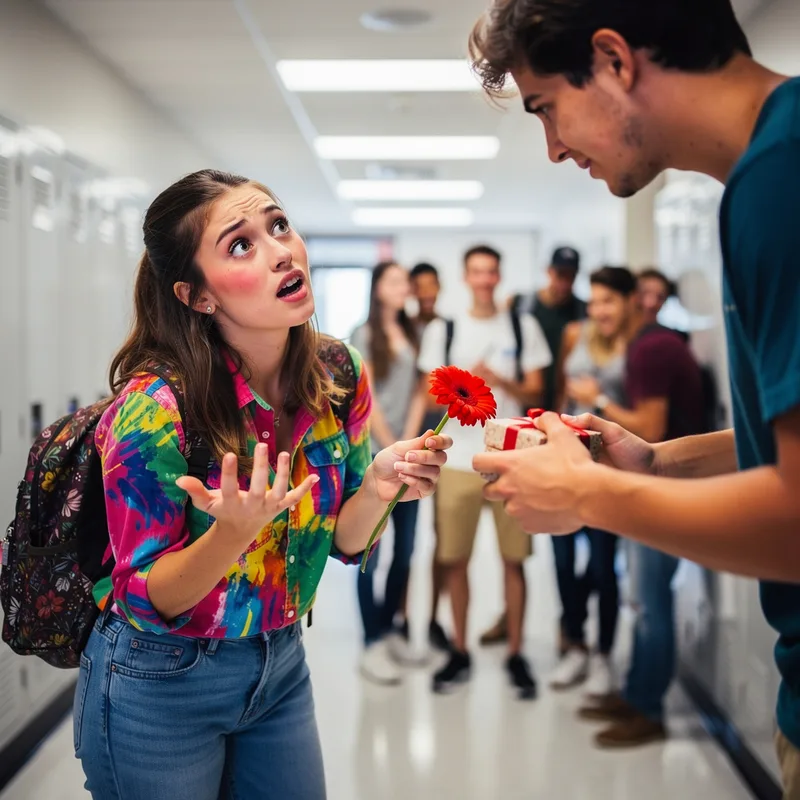
to confuse
 4
2.4
4
2.4

- verb
- /kənˈfjuz/
- A Vatican spokesman said the pontiff was hurt and confused by the suggestion that he might not be Catholic.
- a confused look
- standing there confused
- a confused face
Examples
-
For nearly a minute, I stand confused, puzzling through three distractions at once.
Fiction book (1996) -
She was confused after everyone sang happy birthday to her unexpectedly during lunch.
-
But he was starting to get confused because a movie star was talking to him.
-
But the thing called a broken heart confused her the most.
Fiction book (1998) -
So, with all this "special attention" to me only, I started getting confused and a bit uncomfortable around her.
Blog text (25) -
I see where you've become confused now.
-
Fanny has always known her own mind, known it even when frightened and confused.
Fiction book (2000) -
Mr. Ranjbar, embarrassed and confused, took the ticket from him and moved away hastily.
Fiction book (1992) -
Phil is confused by Gary's sincerity; so is Gary.
Fiction book (2001) -
Dom Paulo looks around at the assembled notables, confused, out of his depth.
Fiction book (1993)
Synonyms
 642
2.1
642
2.1
Make someone feel awkward or ashamed in front of others
 414
6.1
414
6.1
Make someone feel very ashamed and foolish, often in front of others
 170
3.9
170
3.9
To make someone feel guilty or embarrassed to get them to do something
 7
7.1
7
7.1
To make someone feel uncomfortable or embarrassed
 2
8.3
2
8.3
To make someone feel embarrassed or shy


 1
8.4
1
8.4
To make someone feel uncomfortable, confused, or embarrassed

To make someone feel embarrassed or disappointed

To make someone feel embarrassed and less confident

Causing someone to feel ashamed or embarrassed in front of other people
Antonyms


How Embarrassed

Surface Forms
Morphology
Etymology
Confuse comes from Latin con- ('together') and fundere ('to pour'), giving the idea of being 'mixed' inside. Because being mixed up can make you feel lost or awkward, confuse also came to mean 'make someone feel embarrassed'.