
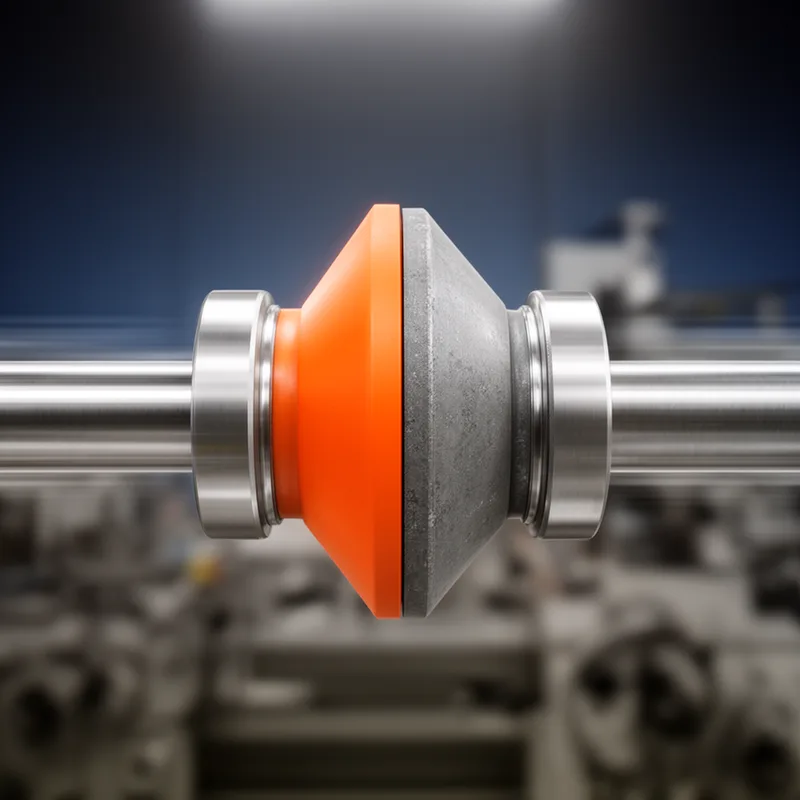
cone friction clutch
- noun
- Specialized
- A cone friction clutch provides better torque transmission due to its larger friction surface area.
Examples
-
Many early automobiles were equipped with a cone friction clutch rather than a plate clutch.
-
When shifting gears, the cone friction clutch helps to prevent unwanted slippage and maintain vehicle control.
-
Maintenance of a cone friction clutch involves regular lubrication of moving parts.
-
The cone friction clutch is essential in many vehicles.
-
Can you explain how a cone friction clutch works?
-
A cone friction clutch is commonly used in automobiles to improve the efficiency of power transmission.
-
The design of a cone friction clutch allows for smoother engagement and disengagement of the engine's power.
Synonyms

 42
4.1

A pedal in a car that connects or disconnects the engine from the gears

 1
7.2
A device that uses rubbing between two surfaces to transfer power when changing gears

A machine part with cone-shaped surfaces that use rubbing to let power pass between two shafts
Surface Forms
Morphology
The compound name is compositionally transparent: 'cone' + 'friction' + 'clutch' straightforwardly describes a clutch that transmits motion using frictional, cone-shaped mating surfaces. Although it's a technical term, the constituents combine in a regular way and a B1 learner who knows the three words can infer the basic function and form.
Etymology
Cone friction clutch comes from the picture of two cone-shaped parts whose rough friction faces press together like two ice-cream cones fitting inside each other. That's why a clutch with this shape can 'transfer turning motion' from one shaft to another.