
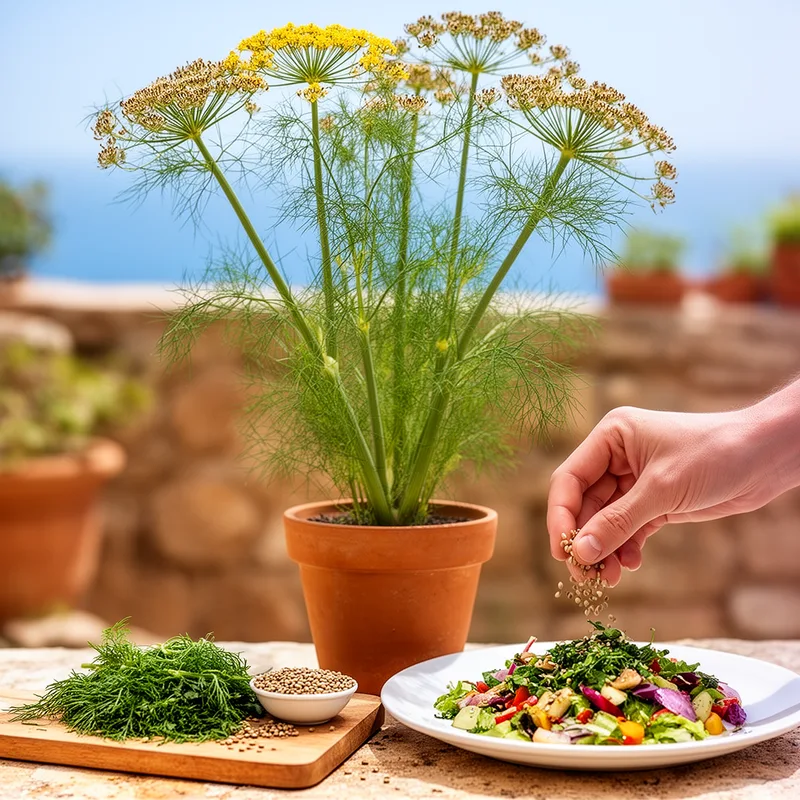
common fennel
- noun
- Specialized
- I added common fennel to the salad.
Examples
-
The seeds of common fennel are used in many Mediterranean dishes.
-
She added fresh common fennel leaves to the salad for extra flavor.
-
I planted common fennel in my herb garden to attract butterflies.
-
Do you like using common fennel in your dishes?
-
Common fennel adds a distinct flavor to Italian sausage dishes.
-
I sprinkled crushed seeds of fennel on my roasted vegetables for an aromatic taste.
-
The chef garnished the salad with fresh fennel leaves to enhance its flavor.
Synonyms

 3
3.0
3
3.0

Thin feathery leaves that you use to flavor food
A strong smelling herb with feathery leaves and seeds that taste like licorice used in cooking and herbal medicine
Surface Forms
Morphology
The noun phrase is directly compositional: 'fennel' names the plant and 'common' simply specifies it as an ordinary/widely occurring variety, so a B1 learner who knows both words can infer the meaning. This adjective+noun pattern is a regular, cross-linguistic modifier construction and not idiomatic, making the expression transparently interpretable.
Etymology
Common fennel comes from an old Latin word meaning 'little hay' because its dry stems and seeds give a sweet, hay-like smell and were used long ago for food and medicine. That's why common fennel today means the aromatic plant people use in cooking for its warm, sweet 'flavor'.