

Foeniculum vulgare
- noun
- /ˌfiːnɪˈkʌləm ˈvʌlɡɛrɪ/
- Specialized
- In the Mediterranean, both the leaves and bulbs of Foeniculum vulgare are common ingredients in cooking.
- Foeniculum vulgare (fennel)
Examples
-
I love cooking with Foeniculum vulgare for its unique flavor.
-
Herbalists recommend infusions made from Foeniculum vulgare to aid digestion.
-
The seeds of Foeniculum vulgare are often used to flavor bread and pastries.
-
Have you ever tried Foeniculum vulgare in your dishes?
-
In Italian cuisine, Foeniculum vulgare is often used to add flavor to meats and sauces.
-
The seeds of Foeniculum vulgare are commonly used in herbal teas for their digestive benefits.
-
Many chefs appreciate Foeniculum vulgare for its aromatic quality in salads and roasted vegetables.
Synonyms
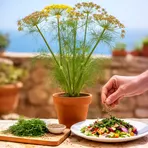
A Mediterranean plant with feathery leaves and seeds used in cooking that taste like anise
Surface Forms
Morphology
Foeniculum + vulgare
This is a Latin binomial: 'Foeniculum' names the fennel genus and the specific epithet 'vulgare' typically means 'common', so a speaker who knows both constituents and taxonomic naming could infer 'common fennel'. However, Latin species epithets and taxonomic conventions are not standard English compositional patterns and 'vulgare' is not given in the learner dictionary, so the meaning is only partly predictable to an average B1 learner.
Etymology
Foeniculum vulgare is the scientific name for the common herb 'fennel'. In Latin, Foeniculum means 'little hay' because its dry stems look like straw and smell sweet, and vulgare means 'common', so the name gives a simple picture of a common, aromatic plant used in 'cooking' and 'medicine'.

