

to come in
 ∞
1.0
∞
1.0

- phrasal verb
- /kʌm ɪn/
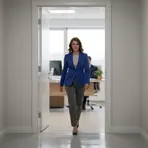
- Please come in and make yourself at home.
- come in here
- come in numbers
- members come in
Loading YouTube…
Watch on YouTubePeople before the pandemic came in and had MRI brain scans.
- People before the pandemic came in and had MRI brain scans.
- Anybody can come in and he can go out.
- If the bar staff don't come in, no money gets made.
- We've had loads of celebrities coming in the shop, which is amazing.
- OK, so this guy comes in here like that.
- Then we have a guest coming in, Athletic Greens.
- And then the men would come in and and ritualistically.
- And again, look at Ronnies reaction when he came in so cute.
- Yeah, He he he, he came in the ring one day gone.
Examples
-
Now, did anybody see you come in here?
-
Every night, a staff member or counselor is gonna come in here and do a show for you.
-
And then he said May I come in please?
-
I feel less nervous than when I came in here, Jim.
-
OK, so this guy comes in here like that.
-
So then she came in and it's a mess.
-
Anybody can come in and he can go out.
-
You could come in and just... just take a seat.
-
Trust me, nobody saw you come in here.
-
Come in for five minutes, say hi to Mum.
Synonyms
 ∞
1.0
∞
1.0
To move from outside into a place or room
 ∞
1.0
∞
1.0
To go into a building, room, or area
 ∞
1.0
∞
1.0
To move into a place, area, or state
 ∞
1.0
∞
1.0
To go inside a place or vehicle
 396
1.6
396
1.6
To enter a room or building by walking without knocking
 319
2.0
319
2.0
Move into or enter a place
 36
3.1
36
3.1
Act quickly without thinking, for example by going into a place
 2
3.7
2
3.7
To enter a place directly and confidently without hesitation
Antonyms


How Quickly

Surface Forms
Morphology
The literal meanings of 'come' (move toward/arrive) + 'in' (into) give a plausible metaphorical reading of 'entering' a state, so 'come in' as 'enter fashion' is partially derivable. However, the specific sense 'become fashionable' is a conventionalized metaphoric extension and may not be fully predictable to a B1 learner without exposure, so it is best classified as partially transparent.
Etymology
The phrasal verb come in paints a simple picture: the parts come and in show someone moving from outside to inside through a door. So come in means 'to enter a place'.