
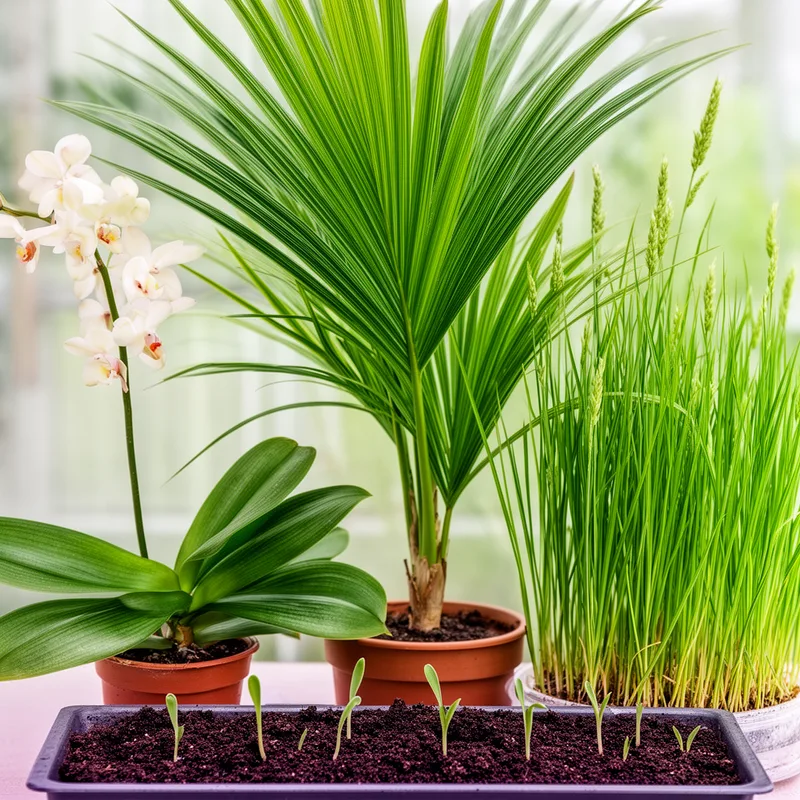
class Liliopsida
- noun
- /klæs lɪliˈɒpsɪdə/
- Specialized
- Palms, orchids, and most grasses are members of the class Liliopsida.
Examples
-
The class Liliopsida includes a wide diversity of economically important crops, such as rice and wheat.
-
Botanists often refer to monocots as plants belonging to the class Liliopsida.
-
The class Liliopsida includes many popular plants.
-
Many gardeners prefer plants from the class Liliopsida.
-
Botanists often refer to monocots as plants belonging to the class Liliopsida.
-
Palms, orchids, and most grasses are members of the class Liliopsida.
-
The class Liliopsida includes a wide diversity of economically important crops, such as rice and wheat.
Synonyms

A large group of flowering plants with one seed leaf and leaves with parallel veins, like grasses and orchids

A group of flowering plants with seeds that have one seed leaf, like grasses and orchids
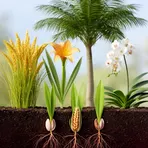
Flowering plants whose seeds have one seed leaf, like grasses, lilies, orchids, and palms
Surface Forms
Morphology
The phrase is compositional: 'class' denotes a taxonomic category and 'Liliopsida' is the taxonomic name for a group of monocotyledonous plants, so together they straightforwardly mean the named botanical class. This follows standard biological naming patterns, so a learner who knows both constituents can infer the MWE's meaning.
Etymology
Class Liliopsida comes from Lili-, meaning the lily, and -opsida, a part meaning 'class'. The name shows 'lily-like' flowering plants that have a 'single seed leaf' and often long leaves with parallel lines, so class Liliopsida is the group for plants like grasses, palms and orchids.

