
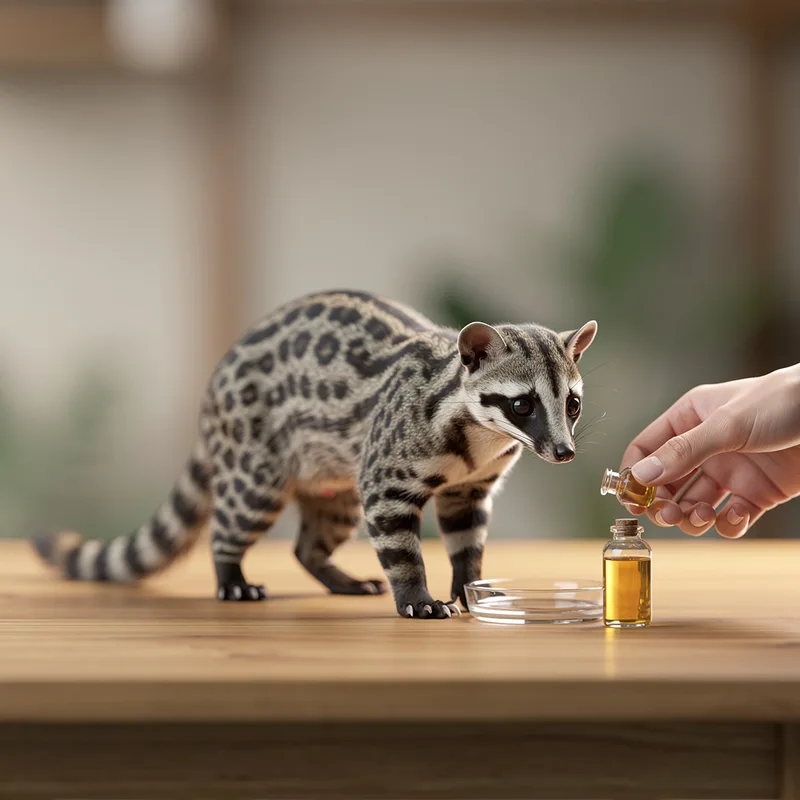
civet
 3
8.8
3
8.8

- noun
- /ˈsɪvɪt/
- Scents of animal origin are popular in perfumes; for example, musk and civet, in solid, oil, and liquid forms, which are sold in the markets of Agadez.
- African civet
- palm civet
Examples
-
Of course you can smell a civet hidden in the snow.
-
The Asian palm civet is a skillful climber and dangerous to the tree-dwelling tarsiers.
Academic text (2010) -
There is a civet in the snow right where you said it would be.
-
There's a civet about to leave his den.
-
"Perfume, fundamentally, is the sexual attractant of flowers, or, in the case of civet and musk, of animals."
Fiction book (1990) -
But in the utter dark of the jungle's night, a twig snapping under the paw of a civet would wake him.
Fiction book (2002) -
Just one species of civet is native to Sulawesi, to the east of Wallace's Line; other civet and mongoose species in the archipelago were introduced by people.
Academic text (2003) -
W. Chris Wozencraft, a zoologist at the National Museum of Natural History, studies the civets and mongooses of China and Madagascar.
Academic text (1990) -
Mongooses belong to the mammalian order Carnivora and are most closely related to cats, civets, and hyenas.
Academic text (1990) -
The civet secretes a musky substance that is highly valued in the perfume industry.
Synonyms

A small cat-like animal from Asia or Africa that makes a strong smell used in perfume

A small Asian animal or the musky substance it makes for perfume
A large civet from India and Southeast Asia with a long body, short legs, and a strong musky smell

A small shy mammal that gives off a strong smell and lives in marshes or forests
A small night animal from Southeast Asia that eats fruit and insects and helps make kopi luwak coffee
A small nocturnal animal like a cat that lives in trees in Southeast Asia

A small animal like a cat that is active at night and lives in Southeast Asian forests

A small meat-eating mammal from Southeast Asia with dark bands and a long tail
Compounds

- US
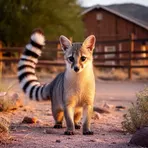
A raccoon-like animal from Mexico and southwestern US with a long bushy tail with black-and-white rings
- Indian
A small meat-eating mammal from Southeast Asia with dark bands and a long tail

A small animal like a cat that is active at night and lives in Southeast Asian forests
Surface Forms
Etymology
Civet comes into English from French civette, a word used for a strong, oily perfume. The animal was named for the powerful 'musk' it makes, so the name links the small, cat-like mammal to the scent it produces.