
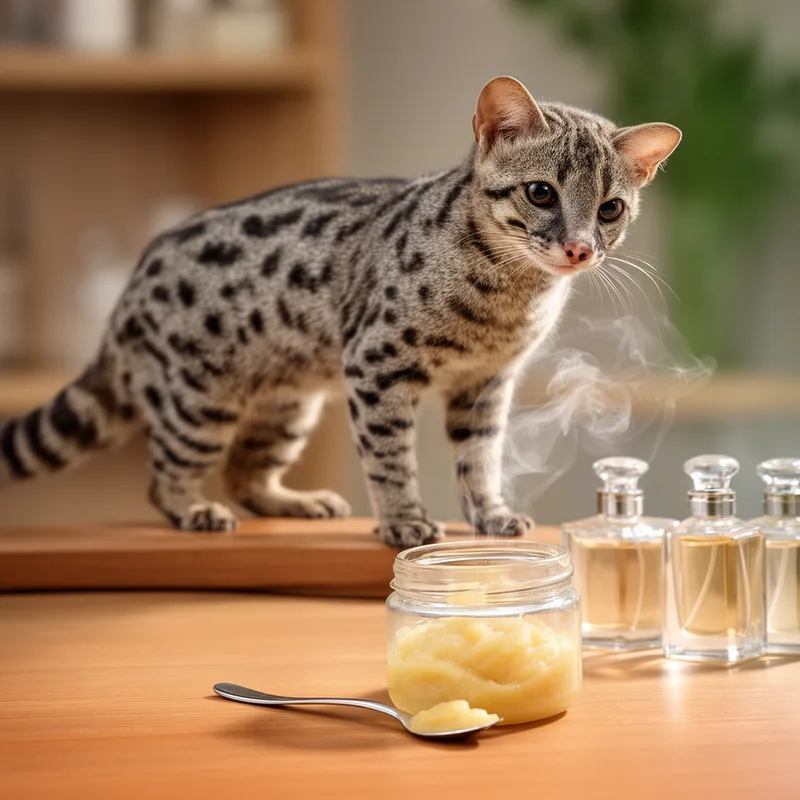
zibet
- noun
- /ˈzɪbɪt/
- The zibet is prized for its musky scent in traditional perfumery.
Examples
-
In some regions, the zibet is protected due to overhunting for its valuable secretion.
-
Zibets are often found in the forests of Southeast Asia.
-
Perfume makers once used the zibet to create long-lasting fragrances.
-
The zibet is known for its unique musky scent.
-
The zibet is known for its musky scent, which is highly sought after in traditional perfumery.
-
In some cultures, the zibet is valued for the musky substance it produces, used in crafting perfumes.
-
Perfume makers historically relied on the zibet to extract its fragrance for creating long-lasting scents.
Synonyms
 31
6.9
31
6.9

A strong-smelling substance from animals or plants used in perfumes
 3
8.8
3
8.8
A small cat-like mammal from Africa and Asia that produces a strong scent used in perfume
Surface Forms
Etymology
Zibet comes from the Arabic word zabād, meaning 'ointment' or 'cream', and came into English through French zibette. The name fits because the animal makes a strong, oily 'musk' that perfume makers used like an 'ointment' to make scents last. That's why zibet today means both the small mammal and the scented substance it gives, much like the better-known word civet.