
ciliary
- adjective
- /ˈsɪl.i.ɛr.i/
- Specialized
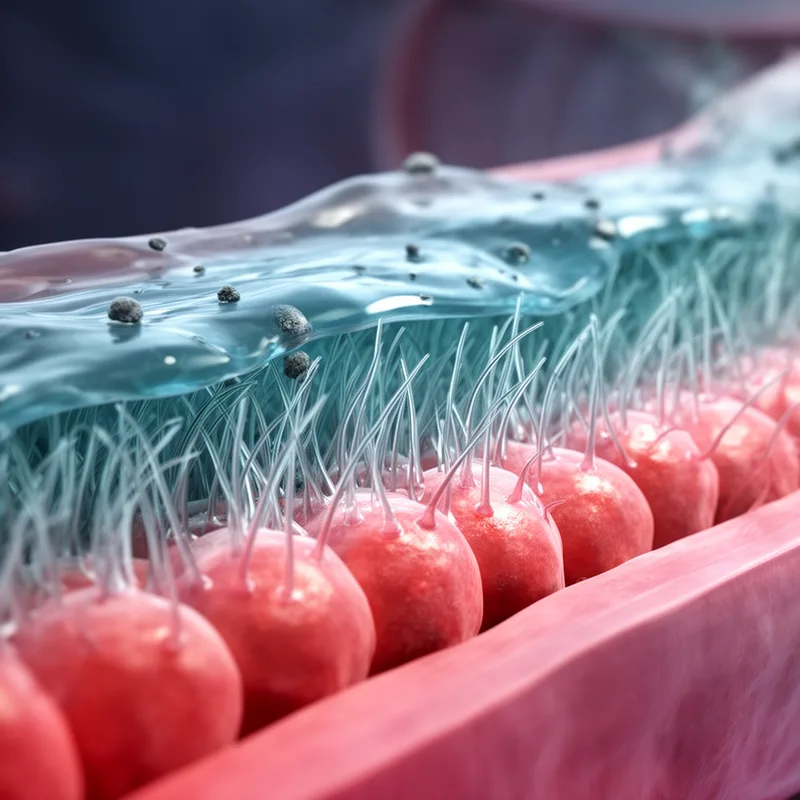
- In the respiratory system, ciliary action helps to clear mucus and debris from the airways.
- ciliary proteins
Examples
-
The ciliary movement of microorganisms allows them to swim through fluid environments.
-
During the lab experiment, we observed the ciliary motion of the cells under the microscope.
-
"Did you get a good conception of the ciliary movement?" he asks me anxiously.
Fiction book (2002) -
The formation of S-nitrosylated ciliary proteins.
Academic text (2016) -
I'm clearing my MUCO ciliary escalator.
-
Willows's lab has identified unique peptide neurotransmitters that increase ciliary beating.
Academic text (2009) -
Moreover, changes in the axoneme, basal bodies, and ciliary rootlets are associated with dyskinesia and mucostasis.
Academic text (1999) -
Unlike its usual ciliary crawling, Tritonia's swimming convulsions are produced by contraction of body-wall muscles.
Academic text (2009) -
In patients with diabetes, the alteration of tissue pH probably affects the properties of mucus and thus impairs mucus transport and ciliary activity.
Academic text (1999) -
Today, electron microscopy and high-power phase-contrast microscopy have improved the accuracy of detecting ciliary abnormalities.
Academic text (1999)
Synonyms



 1
9.2
1
9.2
Having small hairs along the surface, for example on leaves or cells
Small hairlike parts on cells that move

Having many small hairs on a surface, like some cells, that move things
Compounds

- Specialized
A blood vessel that carries blood to the middle layer at the back of the eye

- Specialized
Part of the eye behind the iris that changes the lens shape and makes the clear fluid inside the eye

- Specialized
Small veins that drain blood from the part of the eye that controls focus
Surface Forms
Morphology
Etymology
Ciliary comes from the Latin cilium 'eyelash', and the plural cilia became the name for very small hair-like parts on cells. So ciliary means 'about those tiny hairs' that help move fluids or move the cell.