
ciliary
- adjective
- /ˈsɪl.i.ɛr.i/
- Specialized
- Stone et al. (64) suggested that there is a possible association of the muscle-associated ciliary body with increased IOP.
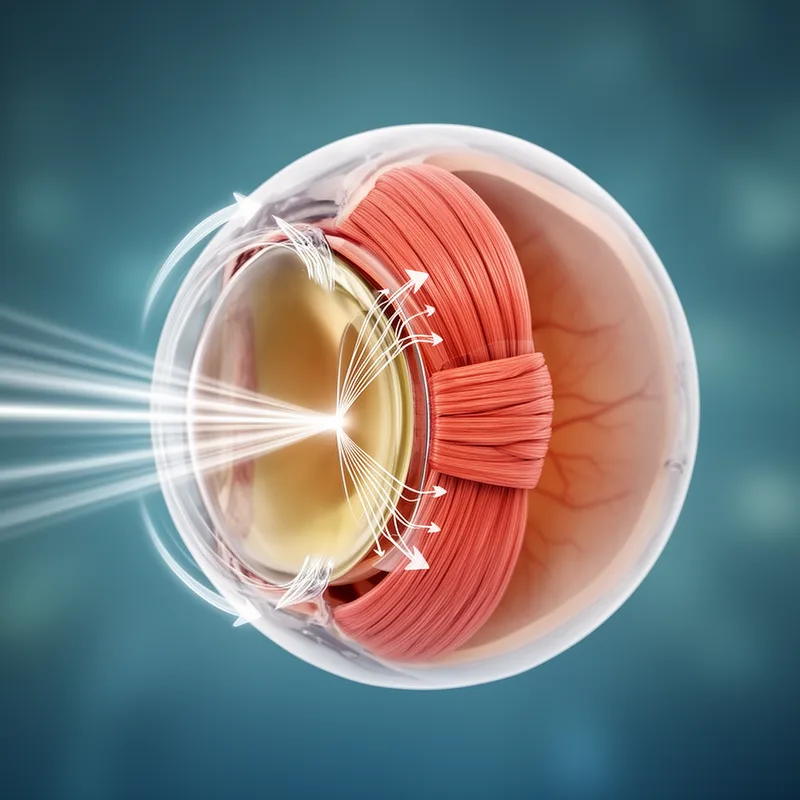
- ciliary body
- ciliary muscle
Loading YouTube…
Watch on YouTubeSo if you try to use one of these muscles like the ciliary body to focus, your other muscles work alongside it.
- So if you try to use one of these muscles like the ciliary body to focus, your other muscles work alongside it.
Examples
-
So here this lens does it by contracting or expanding the ciliary muscles that are control are connected via some fibers to this lens, right?
-
So if you try to use one of these muscles like the ciliary body to focus, your other muscles work alongside it.
-
But these drops also will temporarily paralyze that strong ciliary body muscle within the child's eyes.
-
Therefore, MYOC expression may account for a genetic susceptibility to POAG in specific tissues, including the ciliary body and TM.
Academic text (2018) -
CYP1B1 is widely expressed in the eyes, including the retina, iris, ciliary body, and TM (193).
Academic text (2018) -
The ciliary muscle helps adjust the lens for clearer vision by changing its shape according to the object's distance.
-
As we age, the ciliary body becomes less effective at altering the lens's curvature, which can affect our eyesight.
-
Eye drops can temporarily affect the ciliary function, impacting how well the lens can focus on objects nearby.
Compounds

- Specialized
A blood vessel that carries blood to the middle layer at the back of the eye

- Specialized
Part of the eye behind the iris that changes the lens shape and makes the clear fluid inside the eye

- Specialized
Small veins that drain blood from the part of the eye that controls focus
Surface Forms
Morphology
Etymology
Ciliary comes from the Latin word cilium, which means 'eyelash'. That's why ciliary is used for parts of the eye, like the ciliary muscle and processes, because they are near or connected to the eyelid and its small hairs.

