
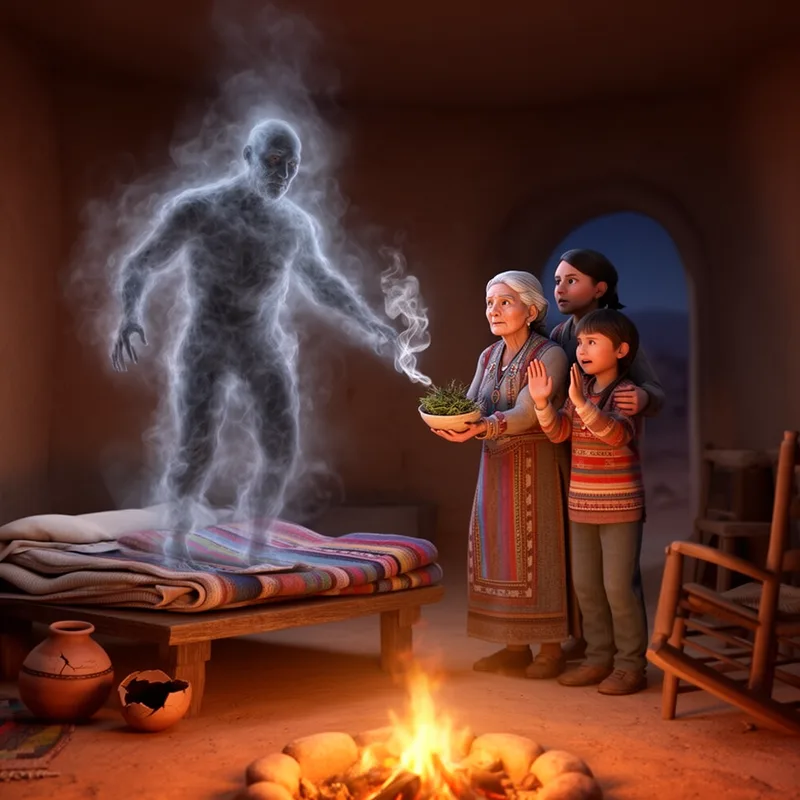
chindi


 1
9.9
- noun
- /ˈtʃɪndi/
- Literature
- The stories warned people that a chindi could linger after a death, causing trouble for the living.
Examples
-
According to Navajo belief, a chindi is a harmful spirit that can bring misfortune to those who encounter it.
-
I think a chindi is the miasma left behind after a person dies.
-
When p234, everyone wore at least a symbolic smudge of soot to make themselves invisible to the chindi.
Fiction book (1993) -
In their rituals, they made offerings to protect themselves from the chindi of the deceased.
Synonyms
 50
6.8
A ghost or invisible being people believe causes harm and bad luck
 1
9.5
A spirit without a body that appears to people or stays near places
 1
9.9
A ghost that people say visits a place, often at night
Surface Forms
Etymology
Chindi comes from the Navajo language and refers to the 'leftover' part of a person after death. A helpful way to remember it is to think of a chindi as a dangerous spirit that stays behind and brings bad luck, which is why the word means a harmful spirit left after someone's death.