
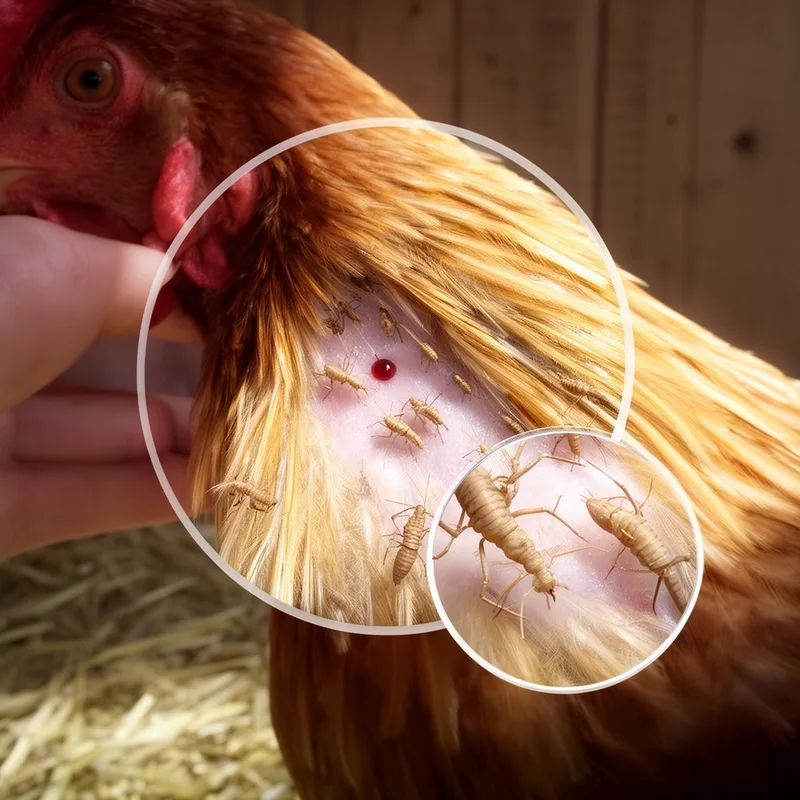
chicken louse
- noun
- /ˈtʃɪkən laʊs/
- The farmer discovered that the chicken louse infestation was causing his hens to lose feathers.
Examples
-
To treat the chicken louse problem, the vet recommended a special shampoo for the birds.
-
After noticing the symptoms, the chicken owner realized that their flock had contracted chicken lice.
-
Couldn't be lice because only chicken lice really bite and Buffy wasn't a chicken.
Fiction book (2002)
Synonyms
 3
6.7
3
6.7

A small insect that lives on hair or fur and drinks blood

A small insect that lives on chickens and eats their skin and feathers
A small insect that lives on chickens and other farm birds and eats their feathers and skin
A small insect that lives on chickens' feathers and causes itching
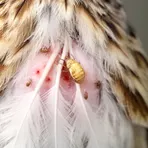
A small wingless insect that lives on birds and eats their feathers and skin
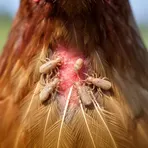
A small wingless insect that lives on birds and bites their skin or feathers

A small wingless insect that lives on birds or mammals and drinks their blood
Surface Forms
Morphology
The compound is a literal noun-noun composition: 'chicken' (a domesticated bird) + 'louse' (a parasitic insect) yields a louse that parasitizes chickens. This straightforward, compositional pattern is common cross-linguistically and would be immediately clear to a B1 learner who knows both constituent words.
Etymology
Chicken louse combines chicken and louse to make a clear picture: a tiny insect living in a chicken's feathers. Farmers saw these bugs hurting their birds, so the name came to mean a small 'parasite' that lives on 'poultry'.