

biting louse
- noun
- /ˈbaɪtɪŋ laʊs/
- Specialized
- Unlike the sucking louse, a biting louse feeds mainly on feathers and skin.
Examples
-
The veterinarian found a biting louse on the parrot's feathers.
-
Poultry farmers often must deal with infestations of biting lice among their birds.
-
The biting louse feeds on the blood of its host.
-
Many birds are affected by biting lice.
-
Poultry farmers often must deal with infestations of biting lice among their birds.
-
The veterinarian found a biting louse on the parrot's feathers.
-
Many birds are affected by biting lice during the warmer months.
Synonyms
 3
6.7
3
6.7

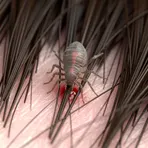
A small insect that lives on hair or fur and drinks blood
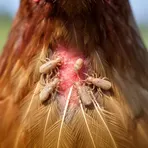
A small wingless insect that lives on birds and bites their skin or feathers

Small insects that live on birds and some mammals and eat skin, feathers or hair
Surface Forms
Morphology
The compound is directly compositional: 'biting' (from 'bite') describes the behavior or mouthparts of the 'louse', so the phrase literally means 'a louse that bites' or 'a louse with biting mouthparts'. This adjective+noun pattern is a regular, cross-linguistically common construction, so a B1 learner who knows both constituents will readily infer the meaning.
Etymology
Biting louse names a small louse that uses its mouth to bite and eat the feathers and skin of birds, so the word biting shows how it feeds. That's why the name means a tiny insect that 'lives on birds' and can harm their feathers.