
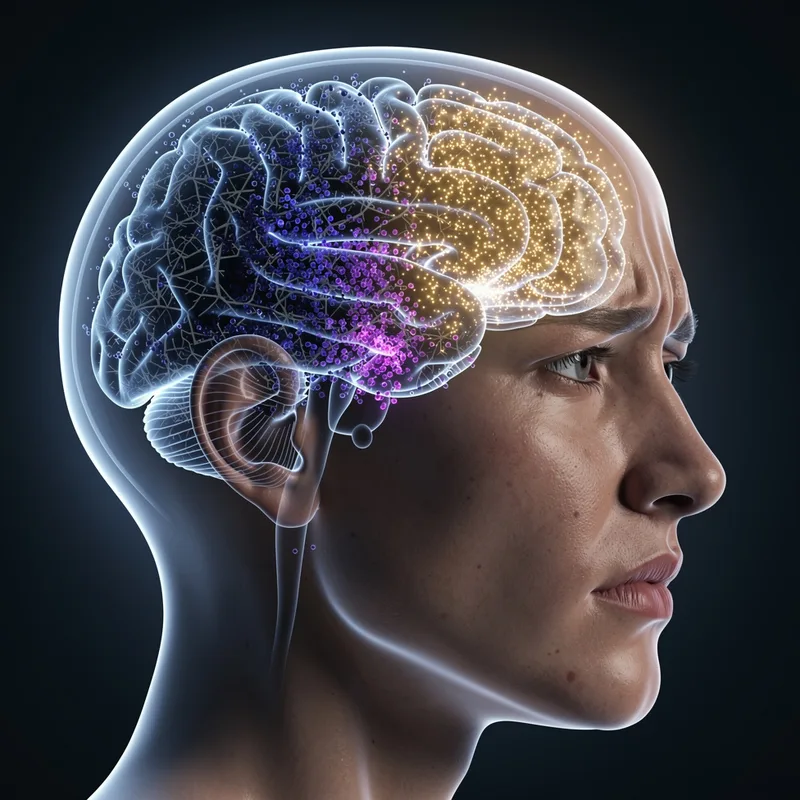
chemical imbalance
 9
4.2
9
4.2

- noun
- /ˈkɛmɪkəl ɪmˈbælənss/
- Some people have depression caused by a chemical imbalance; others have the chemical imbalance caused by a traumatic event.
- chemical imbalance in the brain
- correct a chemical imbalance
- suffering from a chemical imbalance
Loading YouTube…
Watch on YouTubeHis actions were so erratic that maybe he has a chemical imbalance.
- His actions were so erratic that maybe he has a chemical imbalance.
Examples
-
After discussing her symptoms, the therapist suggested that she might have a chemical imbalance affecting her mood.
-
I'm convinced that there is a chemical imbalance in some families.
Blog text (26) -
You know, she had some sort of chemical imbalance where she would kind of black out and anything could happen.
-
Maybe it's a chemical imbalance in my brain.
-
This is a chemical imbalance, a chemical illness in the brain.
-
Then they thought it might be a chemical imbalance and put him on medication.
Fiction book (1996) -
Kyle may have been suffering from a chemical imbalance.
-
I was severely depressed as a result of a chemical imbalance.
Blog text (26) -
Elliot has a chemical imbalance in his brain.
-
I am medicated for a chemical imbalance.
Synonyms
 86
4.2
86
4.2
When different parts are not equal in amount or power
Surface Forms
Morphology
The phrase directly combines 'chemical' (relating to chemicals) with 'imbalance' (an unequal or disrupted balance), so a learner who knows both constituents can infer it refers to an abnormal balance of chemicals in the body or brain. Although the term is used in clinical contexts (e.g., mental health) which add nuance, the core meaning is compositional and cross-linguistically accessible.
Etymology
Chemical imbalance comes from a simple picture: imagine tiny chemicals in the brain like ingredients on a scale, and when the amounts are wrong you get an imbalance. That's why people use the phrase to talk about changes in brain chemistry that can cause 'mood' or 'mental health' problems.