
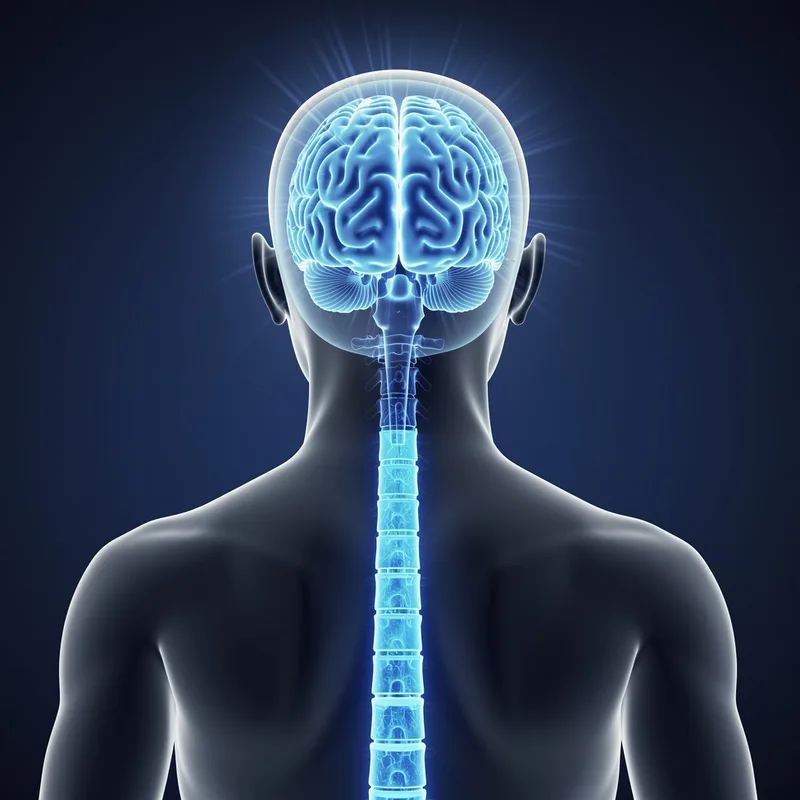
central nervous system
 24
3.2
24
3.2

- noun
- /ˈsɛntrəl ˈnɜrvəs ˈsɪstəm/
- Specialized
- Research shows that stress can negatively impact the functions of the central nervous system.
- central nervous system (CNS)
- central nervous system dysfunction
- central nervous system abnormality
Loading YouTube…
Watch on YouTubeWhat the issue is is a very stressed out central nervous system which is not being calmed down.
- What the issue is is a very stressed out central nervous system which is not being calmed down.
- Your astrocytes inside your central nervous system are happy to make glucose whenever your brain and your nerves need it.
- You are frying your hormonal system, you're frying your central nervous system, IE brain.
- And whether this research translates to actual central nervous system and structure and function, it isn't clear.
- It is a massive collision of the central nervous system, like a bad trip.
- And the immune impacts, the central nervous system impacts, and in turn the impacts on all bodily systems are quite compelling.
- All that being said, going back to this, anxiety affects your heart and part of your central nervous system and so as you guys can see these emotions affect.
Examples
-
The term 'neurological disease' refers to conditions affecting the central nervous system.
Academic text (2011) -
Damage to the central nervous system can lead to severe mobility issues and loss of sensation.
-
Television has become the social brain and central nervous system of developed nations.
Academic text (1991) -
None reported taking any medications with potential central nervous system side effects.
Academic text (2011) -
Without a central nervous system, you won't get far.
-
No participant was taking drugs that affect the central nervous system at the time of the study.
Academic text (2012) -
Injuries to the spinal cord also affect the central nervous system.
Academic text (2012) -
All the major functions-- cardiac, respiratory, central nervous system-- are virtually the same as ours.
-
Huntington's disease affects the central nervous system and causes involuntary jerky movements and double vision.
Academic text (2012) -
The doctor explained that the central nervous system controls both voluntary and involuntary movements.
Synonyms
 5
3.6
5
3.6
Part of the body made of the brain and spinal cord that controls movement and senses
The brain and spinal cord that form the body's main nerve center
Antonyms
- Specialized
1
4.2
The nerves outside the brain and spinal cord that send messages between the brain and other body parts
How Complex
- Specialized
81
2.8

- Specialized
24
3.2
- Specialized
1
3.8
1
3.5
- Specialized
1
5.8
Surface Forms
Morphology
The phrase is directly compositional: 'central' (in the middle/primary) + 'nervous' (relating to nerves) + 'system' (an organized set), so a learner can infer it denotes the main/central set of nerves (i.e., brain and spinal cord). This construction is cross-linguistically common and follows transparent morphological logic, so a B1 learner who knows the constituent words will generally understand the meaning.
Etymology
Central nervous system gives a simple picture: central means the main 'centre', nervous points to the body's nerves like wires, and system means parts working together. So the central nervous system is the body's main control made of the 'brain' and 'spinal cord', which manage feeling and movement.