

caudal
 1
8.2
1
8.2

- adjective
- /ˈkɔːdəl/
- Specialized
- At week 5, the mesenchyme, which covers the caudal surface of the forebrain, proliferates with the surface ectoderm to form the frontonasal process.
- caudal oscillation
- caudal branches
- cranial-caudal
Examples
-
Most people's noses have a thin root, which often widens into a more caudal or inferior direction.
Academic text (1995) -
The veterinarian examined the caudal region of the dog's spine to check for injuries.
-
The lower limb bud appears 2-3 days later, just caudal to the umbilical cord.
Academic text (2006) -
The caudal branches communicate with branches of cervical nerves C2 and C3.
Academic text (2003) -
After the eighth week of gestation, the caudal parts of the cords meet in the midline and fuse in the upper mediastinum.
Academic text (2010) -
Then its caudal fin flexed and it darted into concealment, its wake upsetting the placid diver.
Fiction book (1994) -
Generally, during sequential swallows, the leading edge of the bolus is caudal to the ramus of the mandible at the onset of the pharyngeal portion of swallowing.
Academic text (2011) -
During dissection, we observed the caudal part of the fish was fully developed.
-
The caudal end of the body is important in studying animal locomotion and behavior.
Synonyms

Near the tailbone at the base of the spine
Antonyms



Compounds

- Specialized
An injection of numbing medicine near the lower spine to make the lower body feel nothing for surgery


- Specialized
An injection of pain medicine into the lower part of the spine to numb the lower body for surgery

- Specialized
A tail fin at the back of a fish that pushes water to make it move and steer
- Specialized
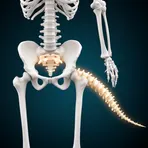
A spine bone at the lower end of the body, found in tails and the human coccyx
How Headward

Surface Forms
Morphology
caudal = cauda (opaque) = caud + al
The word is historically based on a tail-related stem plus '-al', but the stem is not a transparent modern English word for most learners.
Etymology
Caudal comes from the Latin root cauda, meaning 'tail', and is like the English word coda, which also means a 'tail' or 'ending' at the back. So caudal describes something 'at' or 'toward' the tail or rear end of an animal or body.