
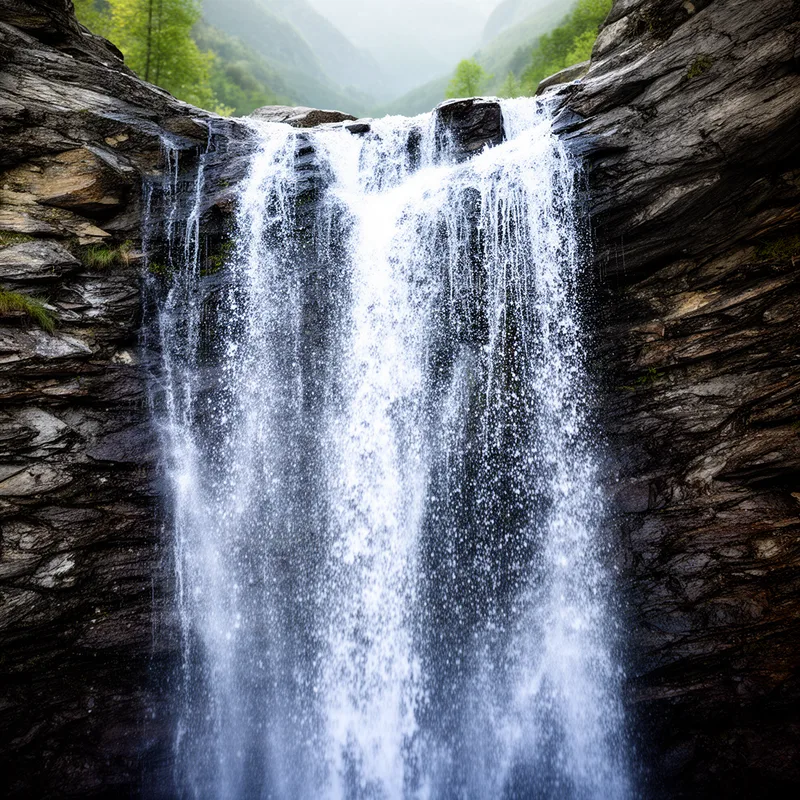
to cascade down
 4
4.2
4
4.2

- phrasal verb
- Great sheets of water are pouring through an upper doorway and cascading down like monsoon rain.
- Water cascaded down
- cascade down a cliff
- stream that cascades down
Loading YouTube…
Watch on YouTubeAnd, you know, if you just arrange it in a way that, I don't know, your little flowers cascade down and you have a little spring cake.
- And, you know, if you just arrange it in a way that, I don't know, your little flowers cascade down and you have a little spring cake.
Examples
-
Each movement sent a miniature mudslide cascading down into the water.
Fiction book (1995) -
The waterfall cascades down the cliff, creating a beautiful mist in the air.
-
It's got a big stone and then they cascade down the side of it.
-
The gifts are rivers of light cascading down from the Father of Light.
Blog text (16) -
She's holding one corner of it with her left hand, and the rest cascades down her back.
-
The hair on nearly all of them cascaded down below their buns.
Fiction book (1991) -
The boy jumps, cascading down the falls and into the pond below.
Fiction book (1992) -
There wasn't a sound except the rush of water cascading down the stairs.
Fiction book (2000) -
The pump sends the water to the top of the funnel, from where it cascades down.
-
Snow fell from trees and small stones cascaded down a steep gully.
Fiction book (1992)
Synonyms
 ∞
1.0
∞
1.0
Move or drop down from a higher to a lower place
 588
1.0
588
1.0
To make liquid flow in a steady stream from a container
 36
3.4
36
3.4
Fall from above in large amounts, like ash or confetti
 34
1.8
34
1.8
To fall from a higher place to a lower place
 31
2.5
31
2.5
To flow down a surface like water on a window
 18
2.9
18
2.9
Move out of a building in large numbers
 17
4.7
17
4.7
To move or fall quickly in large amounts, like a waterfall
 4
3.3
4
3.3
To move along with a strong flow of water
 1
3.5
1
3.5
To fall from above in large amounts, like rain or ash
 1
2.6
1
2.6
Move with a river's current toward a lower place

 1
7.6
1
7.6
Flow quickly and strongly down a surface like water after heavy rain
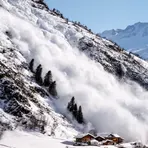
To slide down a mountain in a large mass of snow
How Fast

Surface Forms
Morphology
The verb 'cascade' already means to fall or flow quickly in volume, and adding 'down' simply specifies downward direction; a learner who knows both words can derive the meaning directly. This verb+particle composition follows a common, compositional pattern (reinforcing direction), so the expression is immediately comprehensible to B1 learners.
Etymology
Cascade down comes from the picture of water falling like many small waterfalls. Imagine water that cascades over rocks and runs down in long, shining streams, so the phrase now means 'to flow or fall downward quickly'.