
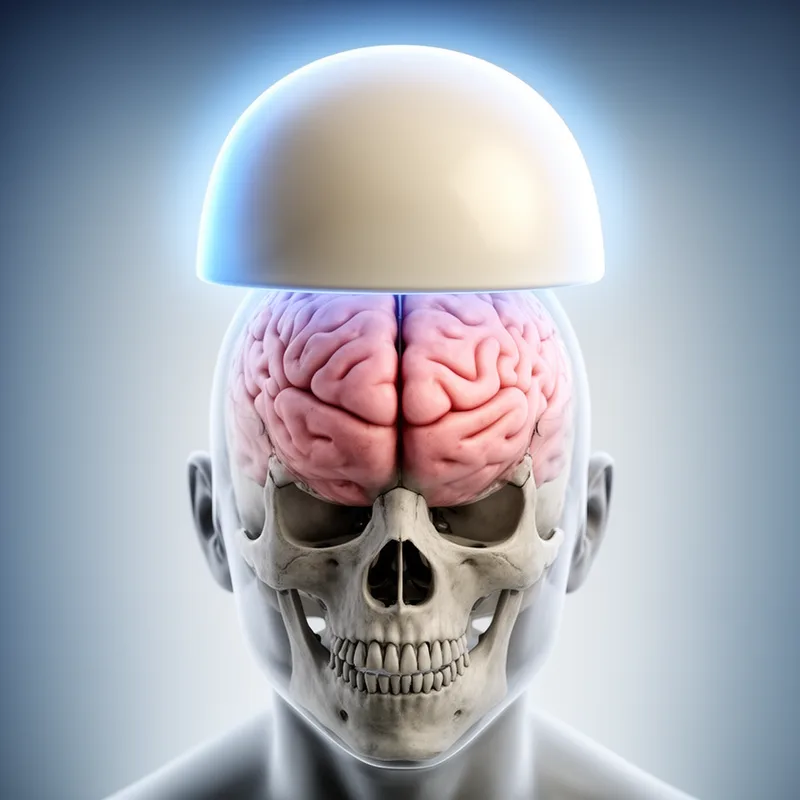
calvaria
- noun
- /kælˈvɛəriə/
- Specialized
- The doctor examined the calvaria to diagnose the patient's condition.
Examples
-
The tumor invaded the calvaria.
Academic text (2005) -
Cavernous hemangiomas most commonly affect the calvaria.
Academic text (2008) -
The most common sites of all types of Langerhans' cell histiocytosis are the calvaria, ribs, and femur, although virtually any bone can be affected.
Academic text (2002) -
In infants, the calvaria is not fully developed, allowing for brain growth.
-
The archaeologists discovered a well-preserved calvaria during their excavation.
Synonyms

 415
1.3
415
1.3

A bony structure of the head that protects the brain
 20
5.7
20
5.7
The part of the skull that covers and protects the brain
 2
9.6
2
9.6
The hard part of the skull that covers and protects the brain inside the head
 1
7.8
1
7.8
The top part of the head bone that forms the curved top and protects the brain
 1
7.0
1
7.0
Part of the skull that holds and protects the brain

 1
9.9
1
9.9
The top part of the skull that covers and protects the brain
Surface Forms
Etymology
Calvaria comes from the Latin calvus, which means 'bald'. So calvaria names the dome-like top of the skull that looks like a 'bald' head and that covers the brain.