
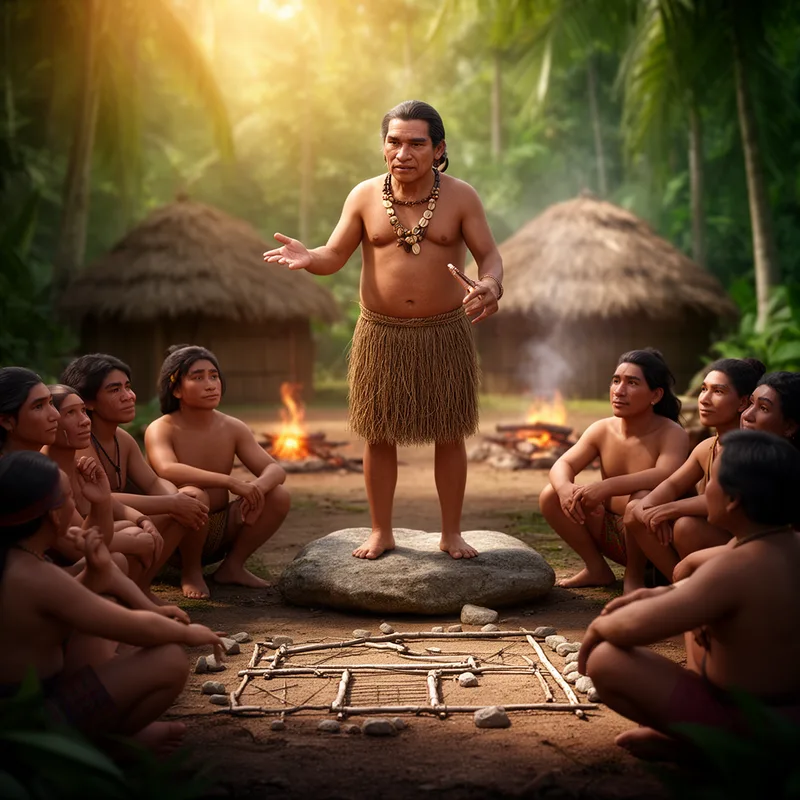
cacique
 1
9.9
1
9.9

- noun
- /kəˈsiːk/
- In Mesoamerican cultures, the cacique was the powerful leader until his death in old age or in battle.
- local cacique
- cacique power
- cacique democracy
Examples
-
Caribbean peoples lived in theocratic kingdoms ruled by chiefs (caciques), Caribs in small villages.
Fiction book (1992) -
In the early colonial period, the cacique was in charge of paying the priest and constructing churches.
Academic text (2007) -
"And how long will we have to work?" the cacique asked.
Fiction book (1995) -
"You are the daughter of the cacique, not I."
Fiction book (1995) -
Coyomo was the son of the cacique in the second largest village.
Fiction book (1995) -
Their uncle was the cacique now, but he had no sons and loved Ximi like his own.
Fiction book (1995) -
The dichotomy lay between indigenous insiders and European outsiders, making the role of the cacique as cultural mediator particularly important.
Academic text (2007) -
In fact, the cacique often paid the church's daily expenses, such as furnishing, upkeep, and choir teachers.
Academic text (2007) -
The group also invoked the rebellious cacique Hatuey, who had resisted the Spanish in sixteenth-century Cuba.
Academic text (2013) -
In many indigenous communities, the cacique plays a vital role in making important decisions.
Synonyms
 3
4.7
3
4.7
A person who leads a group of people in a traditional community
 3
4.2
3
4.2
A leader of a Native American tribe
 1
9.9
1
9.9
A leader of some Native American tribes, especially the Algonquian people

A leader of a Native American tribe who guides the people
How Powerful

Surface Forms
Etymology
The word cacique comes from a native American word kasike meaning 'chief'. Spanish speakers adopted the word, so a cacique is a local leader or village chief.