
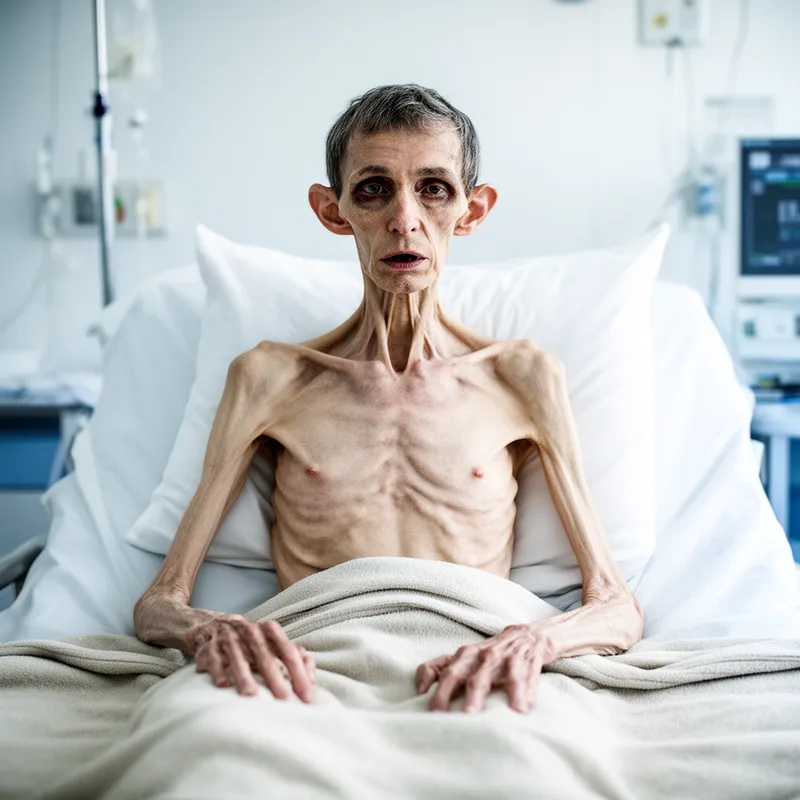
cachectic
- adjective
- /kəˈkɛtɪk/
- Specialized
- Evidence from cachectic cancer studies suggests that HMB may inhibit the ubiquitin-proteasome proteolytic pathway responsible for the specific degradation of intracellular proteins.
Examples
-
After months of treatment, he became cachectic, losing weight and muscle mass.
-
One might expect, for example, that patients who need major head and neck cancer surgery are often dysphagic and even cachectic, and would be hyperosmolar.
Academic text (1998) -
Studies also indicate that HMB can reduce muscle loss associated with diseases such as autoimmune deficiency syndrome (AIDS) 55, 56, and cachectic cancerous conditions 35.
Blog text (23) -
The doctor recommended a special diet for her as she was severely cachectic due to her illness.
-
Many patients with chronic diseases often feel cachectic, showing signs of extreme fatigue and weight loss.
How Thin


Surface Forms
Morphology
Etymology
The word cachectic comes from Greek parts kak- meaning 'bad' and hexis meaning 'condition' or 'state', so it originally meant 'in a bad condition'. That's why cachectic describes someone who is very thin, weak, and in poor physical condition because of serious illness.