

caballero
- noun
- /ˌkæbəˈlɛroʊ/
- Literature
- It is still dark—this is probably the longest night in part II—and the new arrival, only dimly seen, is introduced as El Caballero del Bosque.
- El caballero
Examples
-
In this fashion, it is not dissimilar from Lope de Vega's "tragica historia" of El caballero de Olmedo, whose ending, at least as observed at two different performances of this play.
Academic text (1995) -
This Zorro is a caballero.
-
I'm executing a caballero at midnight.
-
It is important here to note that Cervantes does not call Don Quixote here a caballero, a knight.
-
In return for his collaboration with the Spaniards in several military expeditions, he was also awarded an encomienda, the status of caballero, and a coat of arms, and became one of the richest and most powerful men in sixteenth-century Quito.
Academic text (1999) -
Or will they, like Don Quixote's despised "caballeros cortesanos," prefer the comforts and idle pleasures of life as tenured members of our luxurious institutions of higher learning?
Academic text (2003) -
Don Quixote aspired to become a caballero like the noble knights of old.
-
In the story, the caballero displayed immense bravery and unwavering honor in battle.
-
Every caballero was expected to uphold the values of chivalry and protect the weak.
Synonyms

 178
6.5
178
6.5

A man trained to fight on horseback in the Middle Ages or one given the title Sir by the monarch
 11
9.7
11
9.7
A Christian warrior from the Middle Ages who protected pilgrims and holy sites in Jerusalem
 1
7.9
1
7.9
A soldier or knight who fights while riding a horse
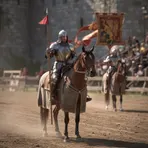 1
9.9
1
9.9
A low-ranking medieval knight allowed to show only a small flag


 1
9.9
1
9.9
A polite, brave man who acts with honor and courtesy

A man given the title Sir by the crown who is not in a knight order
How Chivalrous
- Literature

- Archaic
9
9.7
Surface Forms
Etymology
Caballero comes from the Spanish caballo 'horse', like in cavalry, and first meant a mounted warrior. That's why caballero later meant a knight — a man expected to act with honor and protect others.