
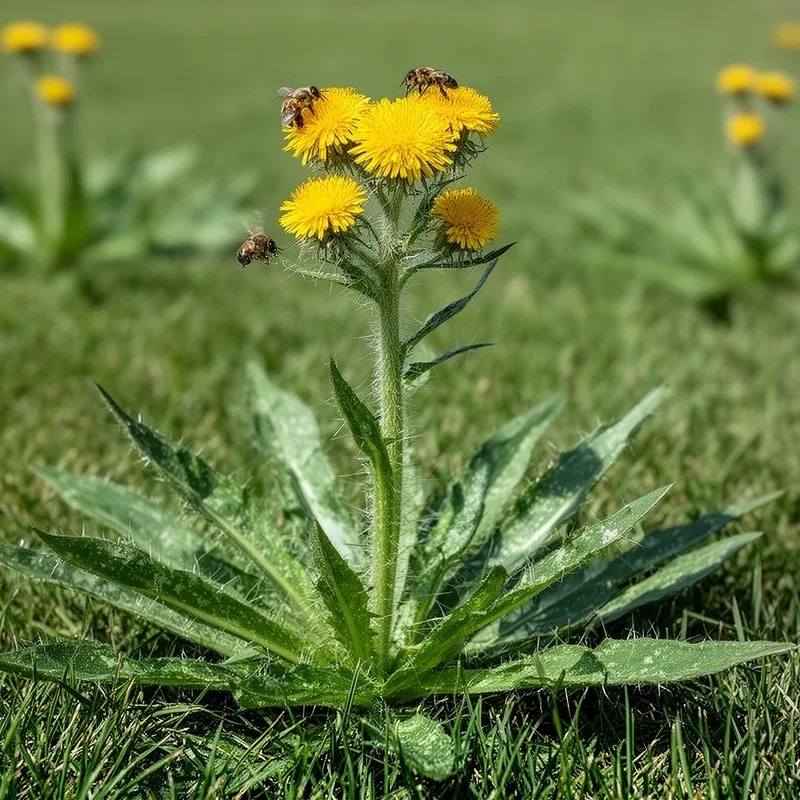
bristly oxtongue
- noun
- UK
- Gardeners often struggle to remove bristly oxtongue from their lawns due to its tough, spiny leaves.
Examples
-
Bristly oxtongue produces bright yellow flowers that attract bees in late spring.
-
The field was overrun with bristly oxtongue after just one season.
-
The bristly oxtongue is often found in disturbed areas.
-
Many gardeners dislike the bristly oxtongue for its invasive nature.
-
Bristly oxtongue often flourishes in neglected gardens, taking over space from other plants.
-
In late summer, the bright yellow flowers of bristly oxtongue can be seen blooming across fields.
-
Farmers battle against bristly oxtongue due to its rapid spread and tough leaves.
Synonyms

A European wild plant with spiny leaves and yellow dandelion-like flowers often seen as a weed
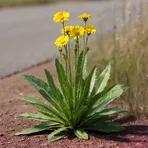
A wild plant with spiny, flat leaves shaped like a tongue and yellow flowers
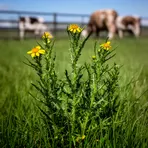
A plant with spiny, tongue-shaped leaves and small yellow flowers that grows as a weed
Surface Forms
Morphology
This is a straightforward adjective+noun compound: 'bristly' (covered in short stiff hairs) modifies 'oxtongue' (a weed), so the phrase denotes the oxtongue plant that is bristly. The composition follows a regular English pattern and is thus easily deducible by a B1 learner who knows both constituents.
Etymology
The plant name bristly oxtongue comes from the leaves: they are long and flat like an ox's tongue, which is the oxtongue, and they are covered in stiff hairs, which is the bristly part. So the name helps you picture this tough 'weed' with tongue-shaped, 'spiny' leaves and yellow flowers.

