
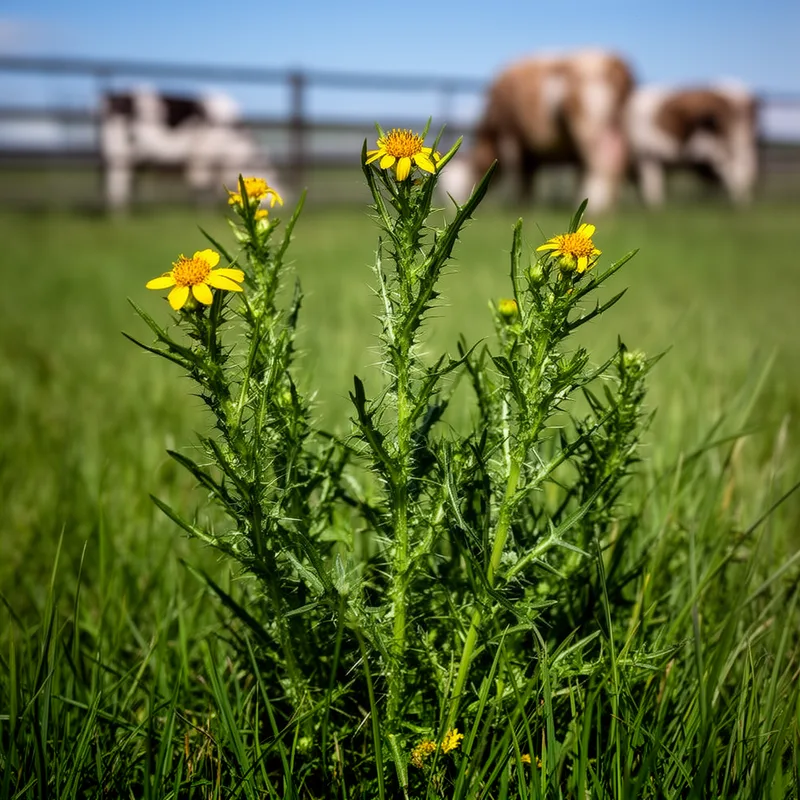
bitterweed
- noun
- /ˈbɪtərˌwid/
- The gardener was frustrated by the spread of bitterweed in the flower beds, as its spiny leaves choked the other plants.
Examples
-
"We've found responses to gaura, bitterweed, dallisgrass that's infected with a fungus called ergot, and a species of willow."
Academic text (1994) -
After their clippers had snipped a hole in the barbed wire fence, we beat the bitterweed and creeper beneath our heels and yelled back for the boys to follow us through the wake we'd frozen in the growth.
Fiction book (1998) -
During a recent hike in the fields, I noticed many patches of bitterweed blooming alongside the path.
-
Farmers are concerned about the invasion of bitterweed, which has started to grow aggressively in their crops.
Synonyms
A weed with spiny, tongue-shaped leaves and yellow flowers
A wild plant with spiny, flat leaves shaped like a tongue and yellow flowers
A European wild plant with spiny leaves and yellow dandelion-like flowers often seen as a weed
Surface Forms
Morphology
Etymology
The word bitterweed is made from bitter ('sharp, not sweet') and weed ('wild plant'). It was used for a European wild plant with spiny leaves and yellow flowers because it tasted or smelled bitter and grew where people did not want it, so gardeners and animals often avoid it.

