

Picris echioides
- noun
- Specialized
- The yellow flowers of Picris echioides resemble those of the common dandelion.
Examples
-
Gardeners may find Picris echioides difficult to remove due to its spiny foliage and deep roots.
-
Picris echioides often colonizes roadsides and abandoned fields throughout southern Europe.
-
The Picris echioides can often be seen blooming in gardens.
-
Have you ever noticed how Picris echioides spreads quickly?
-
In many areas of southern Europe, Picris echioides can thrive along roadsides, showcasing its bright yellow flowers.
-
The spiny leaves of Picris echioides make it a challenging weed for gardeners to manage.
-
During summer, you may spot Picris echioides flourishing in abandoned lots, attracting pollinators with its vibrant blooms.
Synonyms
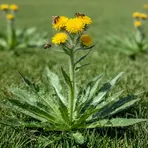
A weed with spiny, tongue-shaped leaves and yellow flowers
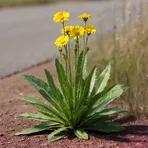
A wild plant with spiny, flat leaves shaped like a tongue and yellow flowers
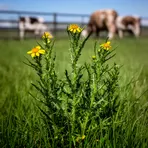
A plant with spiny, tongue-shaped leaves and small yellow flowers that grows as a weed
Surface Forms
Morphology
Picris + echioides
This is a Latin scientific binomial rather than a phrase built from everyday English words: 'Picris' and especially 'echioides' are taxonomic/Latin forms not known to B1 learners, and 'echioides' is not a transparent English morpheme. Even if a learner recognized 'Picris' as a plant genus, the species epithet does not yield a predictable everyday meaning, so the overall term is not derivable from its parts.
Etymology
Picris echioides comes from old Greek words: Picris means 'bitter' and echioides means 'like Echium', a plant with similar leaves and flowers. So the name gives a small picture — a bitter, tongue-shaped-leaved wildflower — which helps you remember this common yellow weed.

