
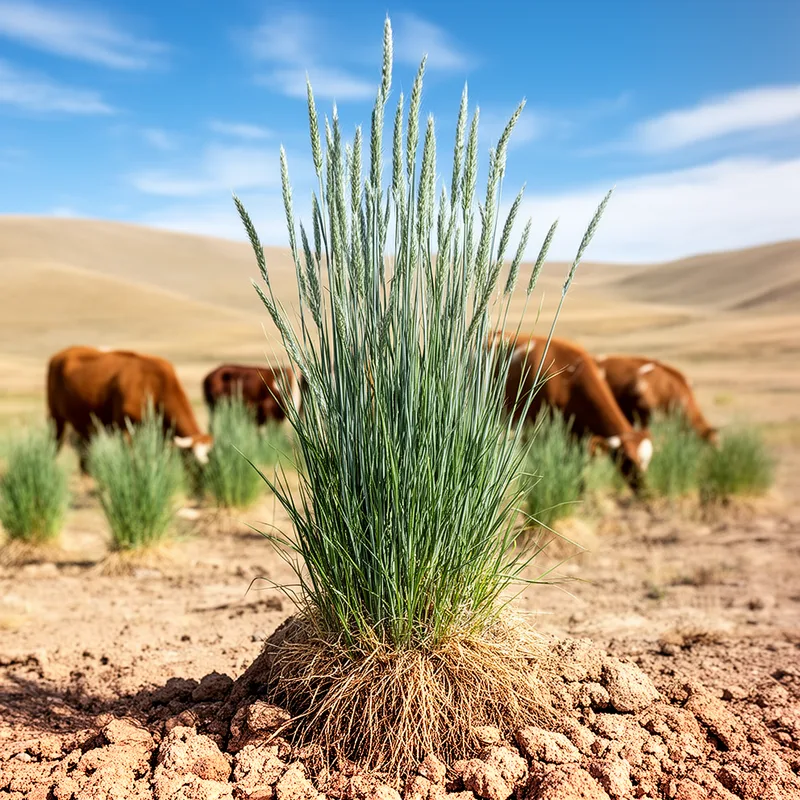
bluestem wheatgrass
- noun
- Specialized
- Cattle graze on bluestem wheatgrass throughout the summer months.
Examples
-
The rangeland restoration project planted thousands of bluestem wheatgrass seedlings.
-
Bluestem wheatgrass is a key species for preserving soil health in the western U.S.
-
Bluestem wheatgrass is well adapted to dry, windy climates in the American West.
-
Farmers often plant bluestem wheatgrass for livestock grazing.
-
The bluestem wheatgrass thrives in dry conditions.
-
Farmers choose bluestem wheatgrass because it provides excellent grazing for their cattle.
-
Bluestem wheatgrass grows best in areas that receive low rainfall and high winds.
Synonyms

A grass used to feed animals like cows and keep soil in place in the western United States

A grass that lives many years in western North America and that farm animals eat

A grass that grows every year in dry western North America and that farm animals eat

A grass that grows on dry plains and feeds animals like cattle

A grass from North America grown in the western United States for animal feed
Surface Forms
Morphology
bluestem + wheatgrass
The compound is a literal noun+noun combination referring to a type of grass: 'bluestem' (a tall forage grass) plus 'wheatgrass' (a grass related to wheat). This is compositional and non‑idiomatic—its meaning as a forage/soil‑conservation grass is directly predictable from the constituents, so a B1 learner who knows the parts should understand it.
Etymology
Bluestem wheatgrass: The name bluestem wheatgrass comes from the plant's look: its stems are often blue-green (bluestem) and its leaves look like young wheat (wheatgrass). Because people found it good for 'grazing' and for 'protecting the soil', the name now refers to this useful forage grass.

