
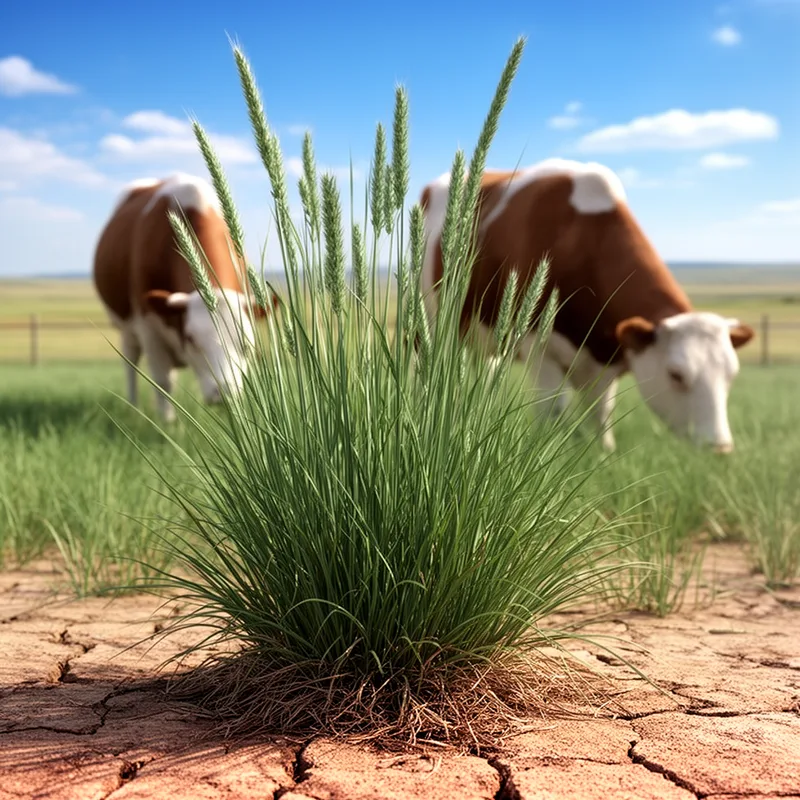
Agropyron smithii
- noun
- Specialized
- Cattle ranchers often plant Agropyron smithii to provide nutritious grazing pastures.
Examples
-
Conservation projects use Agropyron smithii to help prevent soil erosion in the Great Plains.
-
Researchers are studying how Agropyron smithii tolerates drought conditions.
-
Farmers often plant Agropyron smithii for its resilience.
-
Is Agropyron smithii suitable for dry climates?
-
Cattle ranchers often plant Agropyron smithii to provide nutritious grazing pastures.
-
Conservation projects use Agropyron smithii to help prevent soil erosion in the Great Plains.
-
Farmers prefer Agropyron smithii because it grows well in dry conditions and supports local wildlife.
Synonyms

A grass that lives many years in western North America and that farm animals eat
Surface Forms
Morphology
Agropyron + smithii
This is a Linnaean binomial: the genus name Agropyron (a perennial wheatgrass) combined with the species epithet smithii, so a learner who knows the genus term can infer it denotes a particular species of Agropyron (western wheatgrass). Although 'smithii' is a Latinized eponym and does not add descriptive meaning beyond identifying the species, the genus+epithet pattern is a standard, cross-linguistic scientific naming convention that makes the overall meaning predictable.
Etymology
Agropyron smithii starts with agro ('field') and pyron ('wheat'), which gives the image of a wheat-like grass growing in fields. The second part, smithii, is 'named after' a plant scientist called Smith. That's why the name fits a strong grass people use for grazing and to help protect the soil.

