

blade
 18
3.5
18
3.5

- noun
- /bleɪd/
- Specialized
- Not a tree, not a bird, not a blade of grass.
- a blade of grass
- leaf blade
Loading YouTube…
Watch on YouTubeHe's personally offended that people are sharing the blades of grass with him.
- He's personally offended that people are sharing the blades of grass with him.
- So, for example, let's take someone whose basic goal in life is counting blades of grass, right?
- The female Firefly, she's on that blade of grass.
- Next thing you know, I'm face down in the grass in my backyard trying to take macro shots of the blades and, and now, now we're here.
- Poets in America have to be very strong or very weak, like blades of grass that are stepped on and slowly rise again.
- But this actually feels like the grass blades and the the little flocking feel like the right scale to work for miniatures.
- And there will be a Taiwanese dude with a rifle behind every blade of grass in every single mountain pass if China tries to invade.
- A rock, a blade of grass, your clothing, even your book bag is aware it's conscious.
Examples
-
And it was so dark that not a single blade of grass would even grow.
-
A blade of grass, a tree, a flower, whatever.
-
The air was still, not a blade of grass, not a leaf moved.
Fiction book (1997) -
In only a few days, the first rising blades broke through the ground.
Fiction book (1990) -
There wasn't so much as a blade of grass or a weed growing from the dusty earth.
Fiction book (1995) -
In the warm sun, the children played on the lawn, marveling at every blade of grass that swayed in the gentle breeze.
-
As she lay on the ground, she could see the details of each blade of grass up close, glistening with dew.
-
The gardener carefully trimmed the overgrown lawn, ensuring every blade of grass was neatly cut.
Synonyms

A broad flat part of a leaf that is not the stalk
Idioms

Compounds
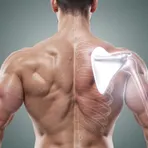
- Specialized
14
2.4
A flat, triangular bone on each side of the upper back that helps hold the arm

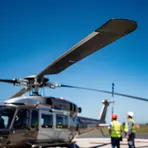
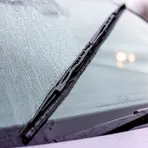
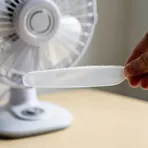



- Specialized
A flat vertical part at the back of a boat or plane that moves to steer it
Surface Forms
Etymology
Blade (the flat part of a leaf) comes straight from an Old English word blæd meaning 'leaf', so the word still means the broad, flat part of a plant just like a leaf itself.