
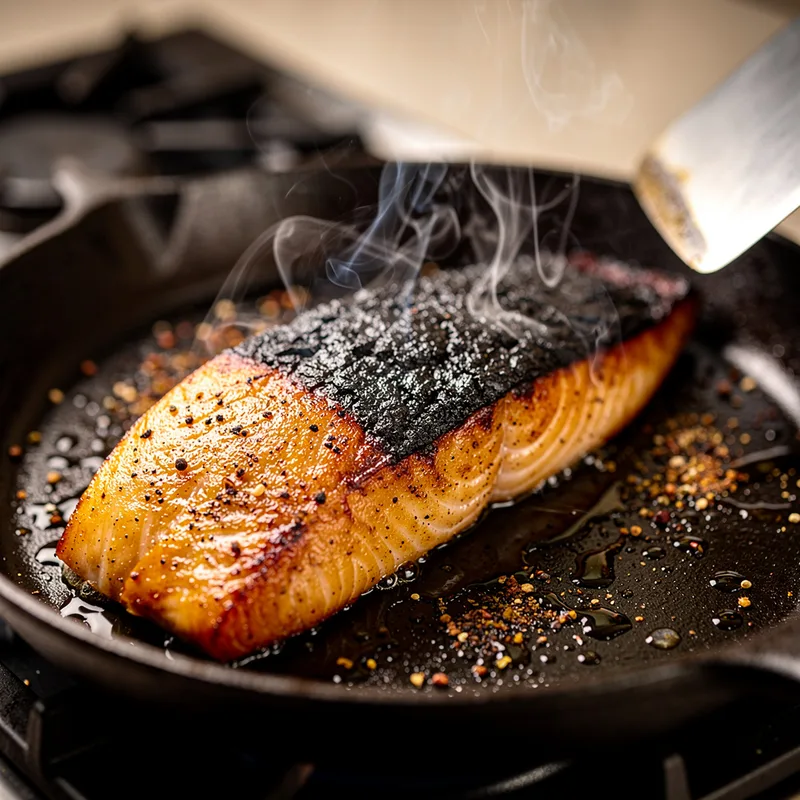
blackening
 1
4.4
1
4.4

- noun
- /ˈblækənɪŋ/
- The bottles were incubated at 30°C until blackening of the medium.
Loading YouTube…
Watch on YouTubeFirst of all, I want to say I think it should be called steel blackening, and I might refer to it as steel blackening because that's what's in my head.
- First of all, I want to say I think it should be called steel blackening, and I might refer to it as steel blackening because that's what's in my head.
Examples
-
The chef noticed the blackening of the meat as it cooked on the grill.
-
Had he done so, he might have found from control experiments (exposing the plate to the screen in the absence of X-rays) that the barium platinocyanide crystals produced a general blackening of the film.
Academic text (1995) -
So this is my video explaining everything I know about the blackening or bluing process.
-
Outside, the Redding sky was jammed with blackening clouds driven east by the wind.
Fiction book (1992) -
Blackening caused the varnish to lose its transparency, forming a surface that etchers could see and through which they could draw their needles.
Academic text (1995) -
The blackening of the sky before the storm was an ominous sign.
-
Changes in temperature led to the blackening of the paint on the walls.
Synonyms
 9
1.3
9
1.3
How dark a color or object looks
 6
3.7
6
3.7
A change when something becomes less light in color
A change that makes something dark in color

Darkening of skin or an insect shell when it gets more pigment
Antonyms


How Dark
1
4.4
 6
3.7
6
3.7
Surface Forms
Morphology
Etymology
Blackening comes from the simple word black meaning 'dark', plus the ending -en meaning 'to make' and -ing for the process. So blackening is literally the act or result of 'making something black' or becoming darker.