

bird of Juno
- noun
- Archaic
- The bird of Juno is prized by collectors for its vivid plumage and grand tail feathers.
Examples
-
Many aviaries display the bird of Juno as their centerpiece attraction.
-
Farmers in Southeast Asia sometimes keep the bird of Juno for both beauty and cultural significance.
-
The bird of Juno is known for its vibrant colors.
-
Have you ever seen a bird of Juno in the wild?
-
Many aviaries display the bird of Juno as their centerpiece attraction.
-
The bird of Juno is prized by collectors for its vivid plumage and grand tail feathers.
-
Farmers in Southeast Asia sometimes keep the bird of Juno for both beauty and cultural significance.
Synonyms

 17
5.9
17
5.9

A large bird with a long tail, often brightly colored and found in fields and woods
 1
8.0
1
8.0
A large colorful bird whose male has a long showy tail

A large Southeast Asian bird with eye-like spots on its wings and tail

A pheasant from Southeast Asian forests whose male has bright feathers to attract a mate

A brightly colored pheasant from the mountain forests of southern Asia, such as the Himalayas

A brightly coloured bird like a pheasant with fleshy face flaps and small horns in mountain forests
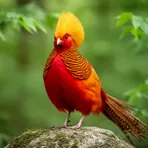
A brightly colored bird with feathers on its head whose male has red and gold feathers

A bright crested bird called the golden pheasant from western China and central Asia
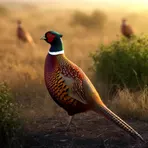
A common bird with bright feathers and a white ring on its neck

A large bird with bright feathers, a long tail, and a white ring on its neck often found in fields

A bird like a pheasant or partridge often kept for hunting
Surface Forms
Morphology
The construction 'bird of Juno' is compositionally clear: a B1 learner who knows 'bird', 'of' and 'Juno' will infer a bird associated with or named for Juno, since the 'X of Y' possessive/associative pattern is cross-linguistically common. However, the detailed encyclopedic meaning (that it is a specific large Southeast Asian pheasant often kept for ornament) is not predictable from the constituents, so the full referent requires prior exposure.
Etymology
The noun bird of Juno may come from Juno, the Roman goddess who had peacocks, so picture a proud bird with a big, colorful tail like a peacock. That's why the name is used for large Southeast Asian pheasants kept for their 'beauty'.