

Phasianus colchicus
- noun
- Specialized
- Male Phasianus colchicus are known for their striking, colorful feathers and long tails.
Examples
-
Wild populations of Phasianus colchicus can often be seen foraging in open fields at dawn.
-
The Phasianus colchicus has adapted well to farmland across much of Europe and North America.
-
I spotted a beautiful Phasianus colchicus in the field.
-
The Phasianus colchicus is known for its striking colors.
-
The male Phasianus colchicus displays vibrant plumage during the mating season.
-
In the autumn, flocks of Phasianus colchicus can be spotted in the fields searching for food.
-
Many farmers appreciate the presence of Phasianus colchicus on their land, as they help control insect populations.
Synonyms
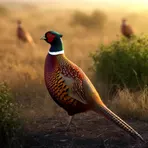
A common bird with bright feathers and a white ring on its neck

A common bird hunted for sport with a pale ring around its neck
Surface Forms
Morphology
Phasianus + colchicus
This is a Latin binomial: 'Phasianus' clearly signals the genus (pheasants), so a learner who knows that constituent could infer the phrase refers to a type of pheasant. However, 'colchicus' is a Latin specific epithet (not an English word) and does not transparently convey the precise sense 'common pheasant' or its geographic origin to a B1 learner, so the full meaning is not fully predictable from the parts.
Etymology
Phasianus colchicus may come from the place where the bird was first seen: one popular story says Phasianus is named after the River Phasis, where pheasants lived, and colchicus means 'from Colchis'. So the name simply means a pheasant from that area, which helps you remember it is the common, colorful pheasant of Eurasia.

