
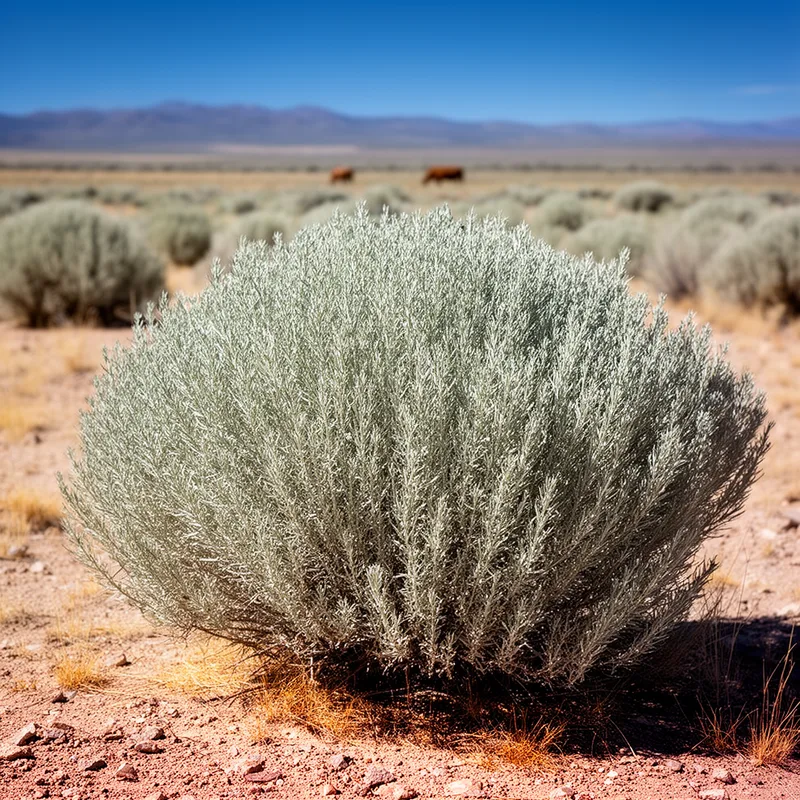
big sagebrush
- noun
- /bɪɡ ˈseɪdʒˌbrʌʃ/
- Specialized
- In the sagebrush steppe ecosystem, big sagebrush plays a crucial role in maintaining soil health.
- mountain big sagebrush
Examples
-
The big sagebrush thrives in the dry, sunlit areas of the western desert.
-
For simplicity, we present the results of the mass balance portion of this study assuming a vegetation distribution of 20% mountain big sagebrush and 80% low sagebrush.
Academic text (2016) -
This result is dependent on the assumed amounts of mountain big sagebrush and low sagebrush (20% and 80%) in the catchment, as well as precipitation and weather conditions.
Academic text (2016) -
Many animals depend on big sagebrush for food and shelter in their natural habitat.
Synonyms
 8
7.7
8
7.7

A woody bush with grey leaves and a strong smell that grows in dry areas
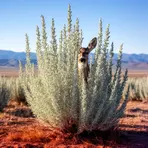
A large shrub with a strong smell and silvery leaves with three parts that grows in dry western North America
Surface Forms
Morphology
The meaning 'a large type of sagebrush' is directly and compositionally derived from combining the adjective 'big' with the noun 'sagebrush' (an aromatic shrub). Adjective+noun composition is a common, transparent pattern across languages, so a B1 learner who knows both constituents will understand the MWE even if they lack botanical or regional background knowledge.
Etymology
Big sagebrush gets its name from how the plant looks and smells: sage points to its strong 'scent', brush means a low woody 'bush', and big shows it is the larger kind. So the name helps you remember it is a large, scented shrub common in dry western areas.