
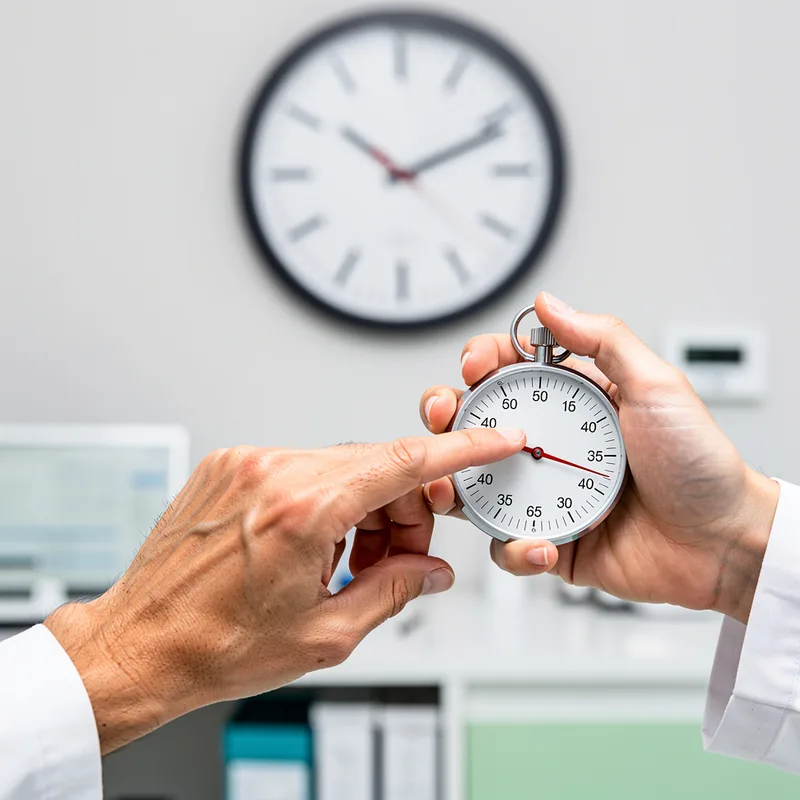
beats per minute
 5
2.7
5
2.7

- noun
- /biːts pər ˈmɪnɪt/
- Specialized
- After a brisk walk, his pulse was recorded at 120 beats per minute.
- beats per minute (bpm)
- rate in beats per minute
- approximately beats per minute
Loading YouTube…
Watch on YouTubeI'll dictate our BPM, which is beats per minute for those that aren't, you know, experienced in the health field.
- I'll dictate our BPM, which is beats per minute for those that aren't, you know, experienced in the health field.
Examples
-
The fitness trainer advised that a heart rate of 150 beats per minute indicates a vigorous workout.
-
Jenny always checked Audrey's pulse; she never counted more than seventy-two beats per minute.
Fiction book (1994) -
The average heart rate in beats per minute across all six days of data collection is shown in Table 1.
Academic text (2015) -
As my heart rate slowly built to 144 beats per minute, its behavior was quite different.
Fiction book (2001) -
The independent variables used for ANCOVA were steps per minute and beats per minute.
Academic text (2015) -
Furthermore, the technology and SC combined had a significant effect on beats per minute during physical activity among fourth and fifth graders.
Academic text (2015) -
Generally, it ranged between a reassuring seventy to eighty beats per minute.
Fiction book (1992) -
Blood pressure 120/65, pulse irregular and ranging from 150 to 180 beats per minute, temperature 100.5 degrees.
Fiction book (1994) -
Heart rate (HR) in beats per minute (bpm) was measured with a Polar E200 HR monitor.
Academic text (2009) -
Medaka hearts normally beat at a frequency of around 130 beats per minute (bpm), i.e., 2.2 Hz.
Academic text (2016)
Synonyms
 168
2.5
168
2.5
The number of times the heart beats in one minute
 8
2.8
8
2.8
Number of times the heart beats in one minute
 3
3.6
3
3.6
Number of beats in one minute that shows how fast a song is
How Fast
- Specialized
10
7.2

- Specialized
5
2.7
- Specialized
168
2.5
- Specialized
3
7.8
Surface Forms
Morphology
The phrase 'beats per minute' is a straightforward composition: 'beat' (pulsation) combined with 'per' (for each) and 'minute' (sixty-second interval) yields the rate of pulsations in one minute. This rate-construction is a common, cross-linguistic pattern for units of measurement, so a B1 learner who knows the constituents will readily infer the MWE's meaning.
Etymology
The phrase beats per minute comes from counting how many heart beats happen in one minute. Doctors and trainers use this number to show a person's 'heart rate', so it tells if the heart is beating fast or slow.