
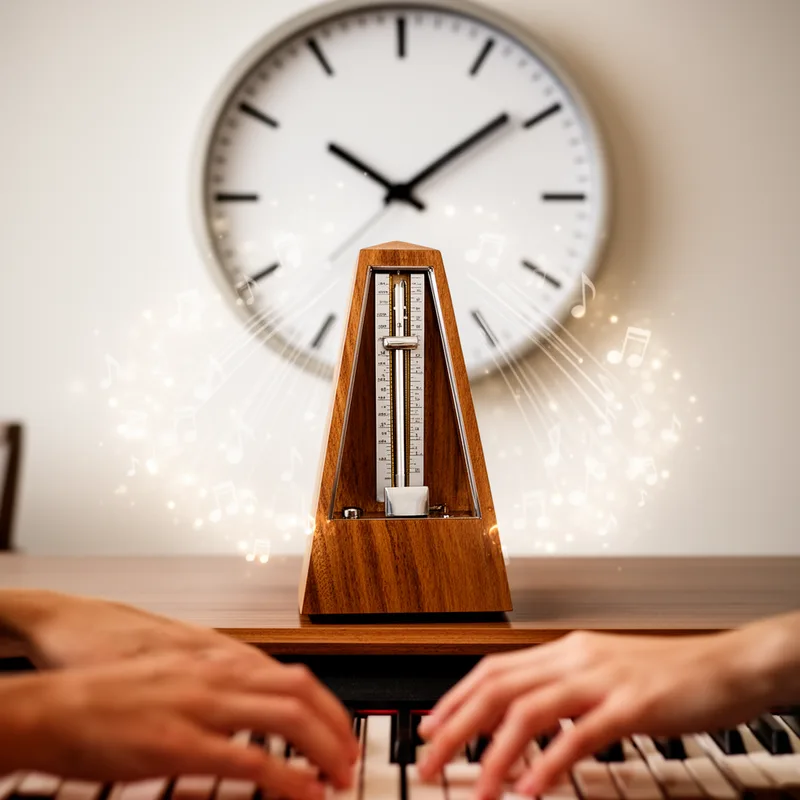
beats per minute
- noun
- Specialized
- The music selected was a fast tempo, popular, rhythmic vocal track ("Underneath the Radar," recorded by Underworld; 148 beats per minute).
- 132 beats per minute
- 130 beats per minute
Examples
-
Many pop songs range from 90 to 130 beats per minute, ensuring they're upbeat and engaging.
-
The song has a lively tempo of 120 beats per minute, making it perfect for dancing.
-
4. Inch forward in four beats per minute increments and repeat the above steps until time is up or you reach the optimal tempo?
Academic text (2004) -
When he inches the metronome up another four beats per minute, he has trouble playing the measure correctly, so he reduces the difficulty by isolating the two problematic notes within the measure.
Academic text (2004) -
Inch forward in four-beat per minute increments and repeat the above steps until you reach a tempo of twelve beats per minute faster than your original tempo or the optimal tempo for this piece, whichever comes first.
Academic text (2004) -
During the workout, I aimed for a heart rate of 150 beats per minute to maximize calorie burn.
Synonyms
 3
3.6
3
3.6

Number of beats in one minute that shows how fast a song is
The number of beats per minute that tells how fast the music should be played

A sign that shows how fast music should be played in beats per minute
How Fast

Surface Forms
Morphology
The phrase 'beats per minute' is a straightforward composition: 'beat' (pulsation) combined with 'per' (for each) and 'minute' (sixty-second interval) yields the rate of pulsations in one minute. This rate-construction is a common, cross-linguistic pattern for units of measurement, so a B1 learner who knows the constituents will readily infer the MWE's meaning.
Etymology
The phrase beats per minute comes from the simple idea of counting how many beats happen in one minute of music. Musicians and devices use this number to set a song's 'tempo' or 'speed', so it tells you how fast to play the music.