
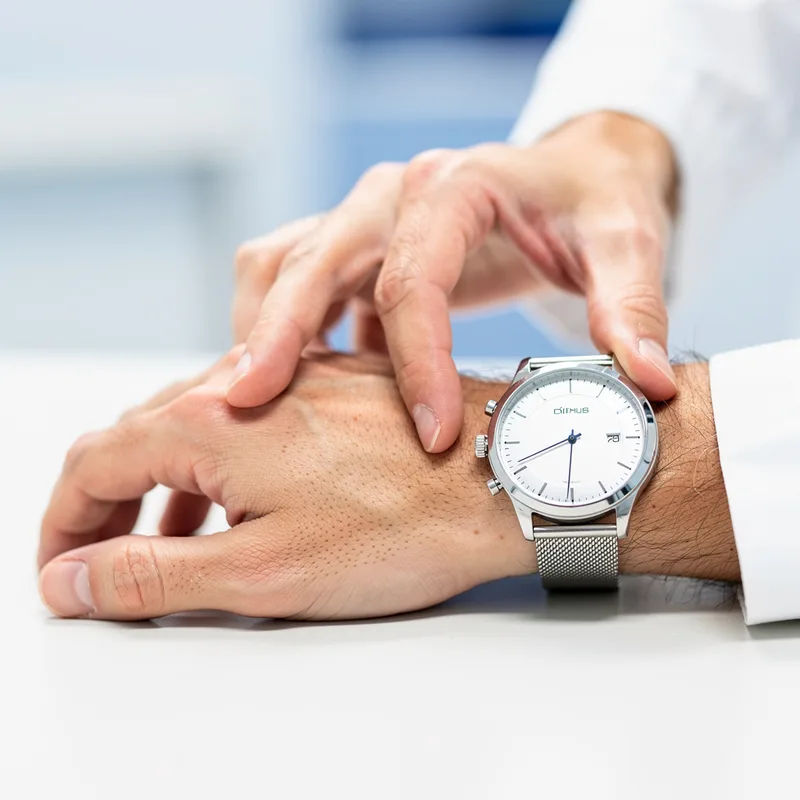
pulse rate
 8
2.8
8
2.8

- noun
- /pʌls reɪt/
- A normal pulse rate for an adult at rest is between 60 and 100 beats per minute.
- blood pressure and pulse rate
- pulse rate over 100 beats
Loading YouTube…
Watch on YouTubeBut that's that's measuring relative blood pressure and pulse rate and blood volume.
- But that's that's measuring relative blood pressure and pulse rate and blood volume.
- You know, we want people whose pulse rates go down, who can, who can stay on task in the midst of, of, of trying circumstances and aren't afraid of them.
Examples
-
Vital signs: pulse rate, blood pressure, mucous membranes, hydration, color (pallor, jaundice)
Academic text (2014) -
I remember hearing a nurse in the emergency room counting down my pulse rate.
Fiction book (2002) -
What is my pulse rate?
-
Record the pulse rate and whether or not it is regular.
Academic text (2011) -
His blood pressure, pulse rate, and other details were broadcast day and night.
Academic text (1991) -
Try slowing your pulse rate down.
-
This is plotting pulse rate against how much exercise you do or how frequently you exercise.
-
Her pulse rate kicked into overdrive, and she ran the whole distance to the hospital.
Fiction book (2000) -
I sat back then, chest heaving, as my pulse rate slowed and my vision normalized.
Fiction book (1991) -
Twice shocked, Mehli's heart had reverted to a normal rhythm and a pulse rate of ninety beats per minute.
Fiction book (2001)
Synonyms
 168
2.5
168
2.5
The number of times the heart beats in one minute
 5
2.7
5
2.7
Number of times the heart beats in one minute to measure pulse
How Fast

Surface Forms
Morphology
The meaning 'number of heartbeats per minute' is directly derivable from combining 'pulse' (heartbeat/throbbing) with 'rate' (measured frequency), yielding the straightforward notion 'rate of the pulse'. This is a common noun–noun measurement construction found across languages and follows standard English composition, so a B1 learner who knows both constituents should understand it.
Etymology
The name pulse rate comes from the small beat you can feel at your wrist: a pulse is a tiny beat and rate tells how often it happens. To find your pulse rate, you count those beats in one minute, so the phrase means 'the number of heartbeats per minute'.