
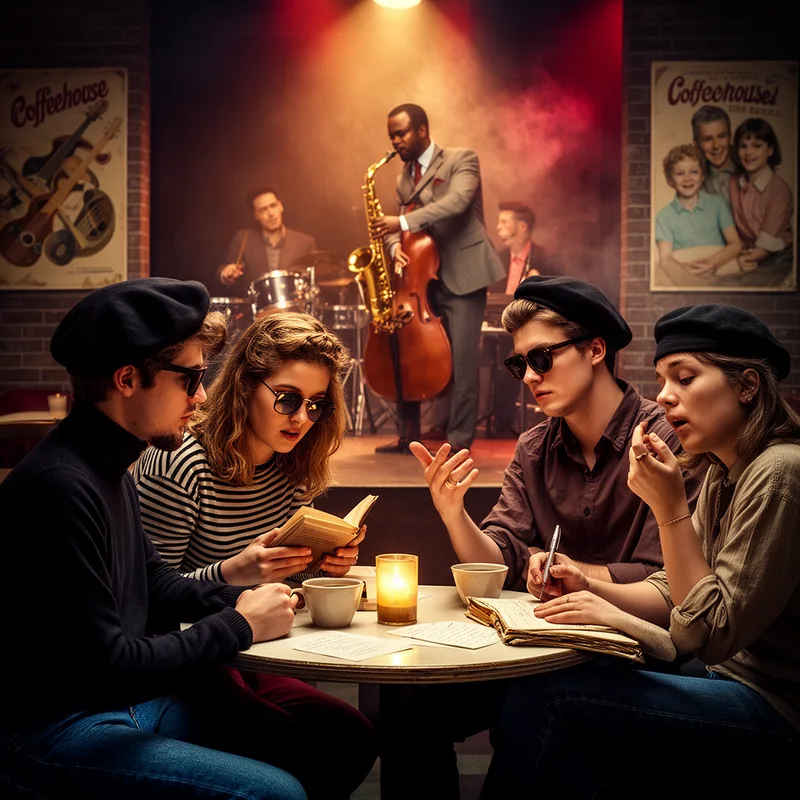
beats
- noun
- /biːts/
- Archaic
- The beats gathered in coffeehouses to discuss literature and philosophy.
Examples
-
The influence of the beats can still be seen in countercultural movements today.
-
Many beats were inspired by jazz musicians like Charlie Parker.
-
The beats were known for their love of jazz music.
-
Many beats rejected traditional societal norms.
-
The beats rejected conventional norms and sought alternative ways of living.
-
Writers and poets in the beats community often gathered to share their work.
-
The beats celebrated spontaneity and creativity in their artistic expressions.
Synonyms

 27
9.6
27
9.6

A writer or artist from the Beat Generation of the 1950s
 15
9.0
15
9.0
A young person in the 1950s who lived a free, artistic life and wore unusual clothes
 2
8.0
2
8.0
A group of American writers and artists from the 1950s who reject social rules and choose free creative lives
Idioms


Compounds

Surface Forms
Morphology
beats = Beat (semi-transparent) = beat + s
The plural -s is a regular and transparent inflection of the noun 'Beat'; forming the plural to indicate members is straightforward.
Etymology
The word beats for the 1950s writers comes from jazz slang beat, which meant 'tired' or 'down' and also hints at the music 'beat' (the rhythm) they loved. So beats became the name for people who felt worn out by normal life and who followed jazz, free living, and new ideas.