
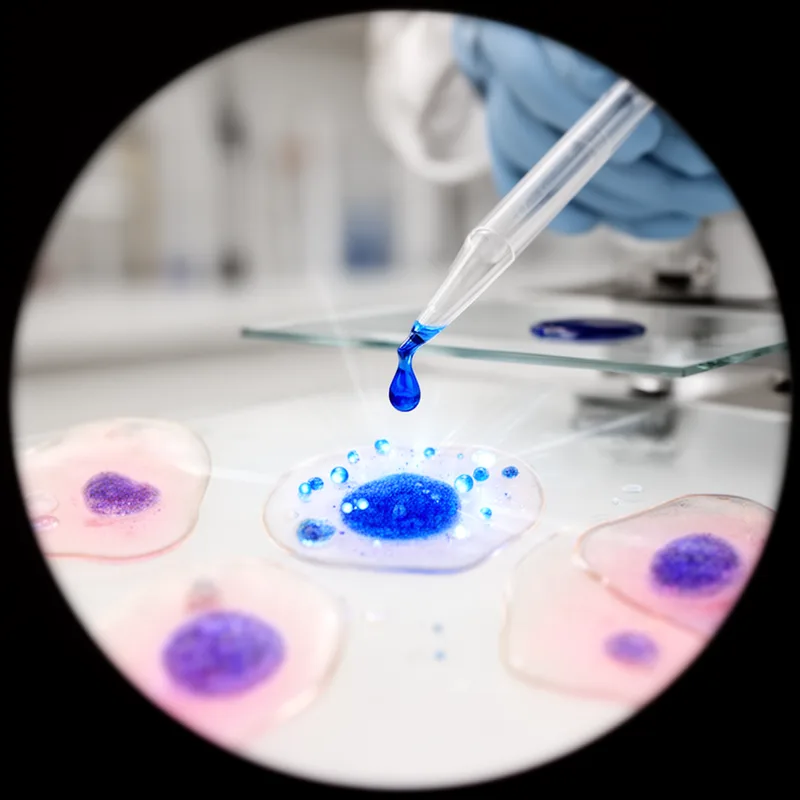
basic dye
- noun
- Specialized
- The scientist used a basic dye to stain the cell nuclei for easier observation under the microscope.
Examples
-
Methylene blue is a well-known example of a basic dye used in biological staining.
-
Unlike acid dyes, basic dyes are attracted to the acidic structures within cells.
-
The basic dye worked perfectly.
-
The scientist used a basic dye to stain the cells.
-
Methylene blue is a well-known example of a basic dye used in biological staining.
-
The scientist used a basic dye to stain the cell nuclei for easier observation under the microscope.
-
Unlike acid dyes, basic dyes are used to stain cellular structures due to their attraction to acidic components.
Synonyms
A dye with a positive charge that sticks to acid parts and stains cells and fabrics

A substance used to add color to cloth and hair
Surface Forms
Morphology
The phrase is compositionally built: a learner who knows 'basic' means alkaline and 'dye' means a colouring substance can infer this is a dye with basic (alkaline) properties. While the definition adds technical details about positive ions and staining acidic components, the core meaning (‘a dye that is basic/alkaline’) is directly derivable from the constituents.
Etymology
Basic dye comes from how the basic part is 'positively charged' and is attracted to 'acidic' parts of cells. A basic dye is like a tiny 'positive' paint that sticks to those 'acidic' areas, so it makes them easy to see under a microscope.

