
basic color
- noun
- Specialized
- The artist began with a basic color to create a solid foundation for the painting.
Examples
-
The dye is a basic color used in textile applications.
-
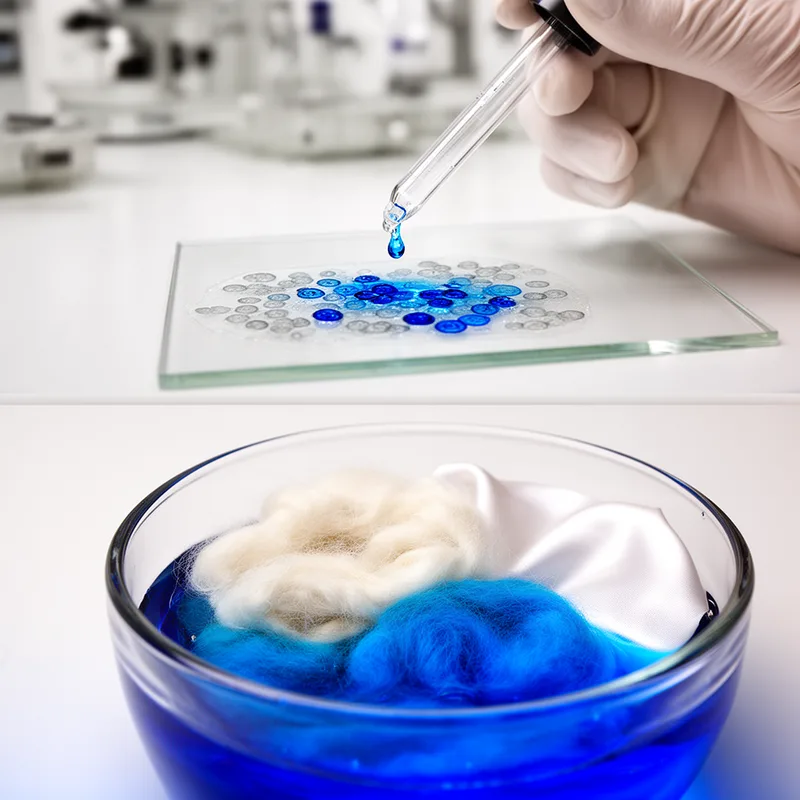
Because it binds to acidic components, a basic color is ideal for staining cell nuclei.
-
Methylene blue is a commonly used basic color in histology.
-
Some basic colors are employed to dye wool and silk fabrics.
-
The basic color of the fabric is bright red.
-
To achieve the desired effect, he carefully mixed a basic color with other dyes for the fabric.
-
In textile dyeing, selecting the right basic color is crucial for the final appearance of the material.
Synonyms


 1
4.0
1
4.0
A thing added to food, fabric, paint, or cosmetics to give color

A positively charged stain used to colour acidic parts of cells
Surface Forms
Morphology
The compound literally combines 'basic' (alkaline) and 'color' (a dye), so a learner who knows those words could infer it refers to a dye with basic/alkaline properties. However the precise technical sense — that the chromophore is part of a positive ion — is specialized chemical knowledge and not predictable from general vocabulary, and the common sense of 'basic' (simple/fundamental) may mislead learners. For these reasons the expression is only partially transparent to a B1 learner.
Etymology
Basic color comes from chemistry: the word basic here refers to a dye, so the color has a positive charge and is attracted to 'acid' parts of cells or fabric. That's why a basic color is used to stain cell nuclei and to dye wool.