

to bail out
 3
4.7
3
4.7

- phrasal verb
- /beɪl aʊt/
- He grabbed a bucket to bail out the excess water before it capsized.
- bail out the boat
- bail out water
Examples
-
That's why we've got to bail out the water as fast as we can.
-
She was bailing the boat out with the diaper bucket.
Fiction book (1998) -
I mean we can use them to bail water out.
-
Its been hard to finish when one is busy bailing out water all day to stay afloat.
-
But this boat is flimsy and rickety and ships great quantities of water in its hold; and unless it is bailed out all the time, it quickly sinks.
Academic text (2009) -
The crew worked quickly to bail out the water from the sinking boat.
-
During the storm, we had to continuously bail out our canoe to keep it afloat.
Synonyms
 14
7.0
14
7.0
To remove water from a boat using a bucket
 5
4.8
5
4.8
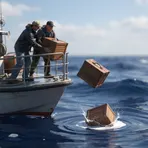
To throw someone or something from a boat into water

To scoop water out of a boat and throw it over the side

To remove liquid from a surface by wiping it with a cloth
How Thorough

Surface Forms
Morphology
The sense 'to give financial help to prevent failure' is a metaphorical extension of the literal verb 'bail' (to remove water) combined with 'out' (removal/away), so there is a recognizable relation of 'removing someone from trouble' but the specific financial-rescue meaning is not directly predictable from the literal senses. Because the connection depends on a metaphorical transfer and background knowledge of the idiomatic use, an average B1 learner who knows only the literal constituents would likely not infer the exact meaning without prior exposure.
Etymology
Bail out comes from using a bucket to bail water out of a boat to stop it from sinking. So it means 'to remove water' from a boat.