
babesiosis
 1
9.9
1
9.9

- noun
- /ˌbeɪbiˈziːəsɪs/
- Specialized
- The number of reported cases of babesiosis has increased significantly in recent years.
Examples
-
Babesiosis is increasingly being reported from areas where Lyme disease alone was previously endemic.
Academic text (2014) -
Human babesiosis is a growing public health concern, especially in the northeastern United States.
Academic text (2012) -
Diseases once thought to have limited impacts, such as babesiosis, should be watched closely, she says.
Academic text (2009) -
Current knowledge of the geographic range of babesiosis is incomplete and relies exclusively on human case reports.
Academic text (2014) -
Vector-based surveillance can provide an early warning system for the emergence of human babesiosis.
Academic text (2014) -
Humans suffer from babesiosis and malaria, diseases caused by blood parasites that are spread by ticks and mosquitoes.
Academic text (1994) -
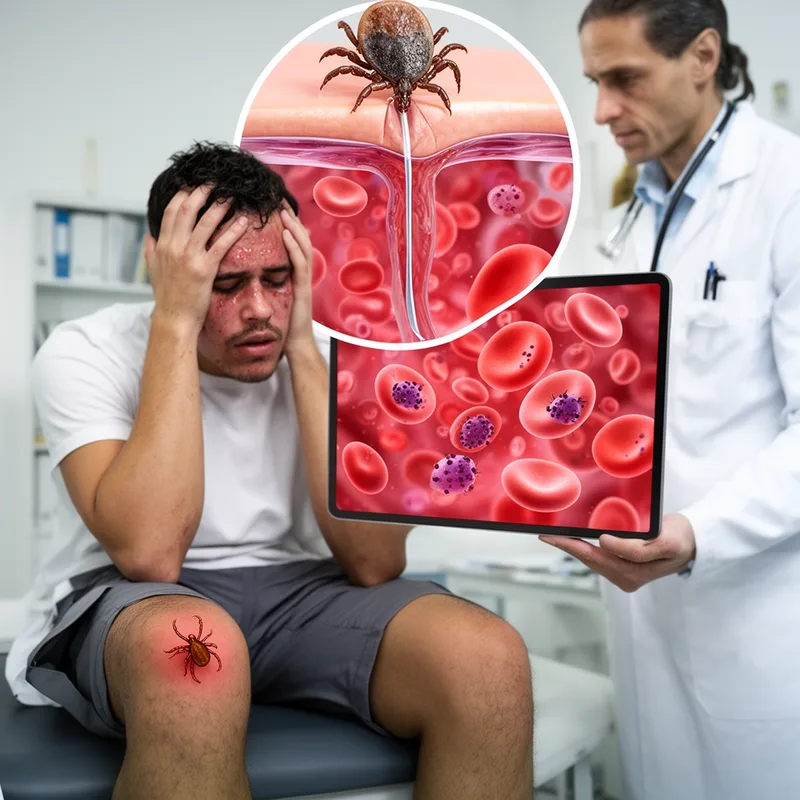
Human babesiosis is an emerging tick-borne disease caused by the intraerythrocytic protozoan Babesia microti.
Academic text (2014) -
Human babesiosis is an emerging tick-borne disease that can cause severe fever and anemia.
-
Symptoms of babesiosis often include high fever and chills, similar to those of malaria.
Synonyms

A disease that makes animals like cattle or horses have fever and lose red blood cells after tick bites
Surface Forms
Morphology
Etymology
Babesiosis comes from the parasite name Babesia, named after the Romanian scientist Victor Babeș, and the ending -osis, which means 'disease', as in tuberculosis. So babesiosis is the disease caused by Babesia parasites, often spread by tick bites.