
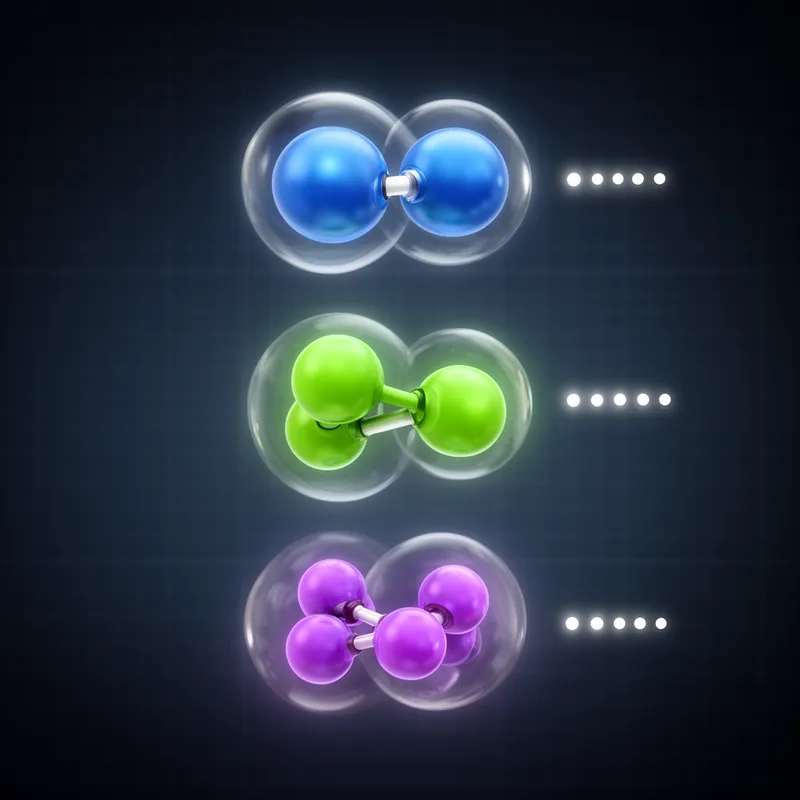
atomicity
- noun
- /əˌtɑːˈmɪsɪti/
- Specialized
- Chemists use atomicity to describe how many atoms are in a single molecule of a substance.
Examples
-
The atomicity of oxygen gas is two, as each molecule contains two oxygen atoms.
-
Hydrogen has an atomicity of two because its molecules are made up of two hydrogen atoms.
-
The atomicity of water is two hydrogen atoms and one oxygen atom.
-
Can you explain the concept of atomicity in chemistry?
-
The atomicity of water is three, since each molecule consists of two hydrogen atoms and one oxygen atom.
-
In organic chemistry, the atomicity of methane is five, reflecting its structure of one carbon atom surrounded by four hydrogen atoms.
-
Understanding the atomicity of a compound helps chemists predict its chemical properties and behaviors.
Surface Forms
Morphology
Etymology
The word atomicity comes from atom, from a Greek word meaning 'uncut' or 'indivisible', so an atom was thought of as the smallest part. In chemistry, atomicity simply counts how many atoms are in one molecule, which is why oxygen gas has atomicity two.

