
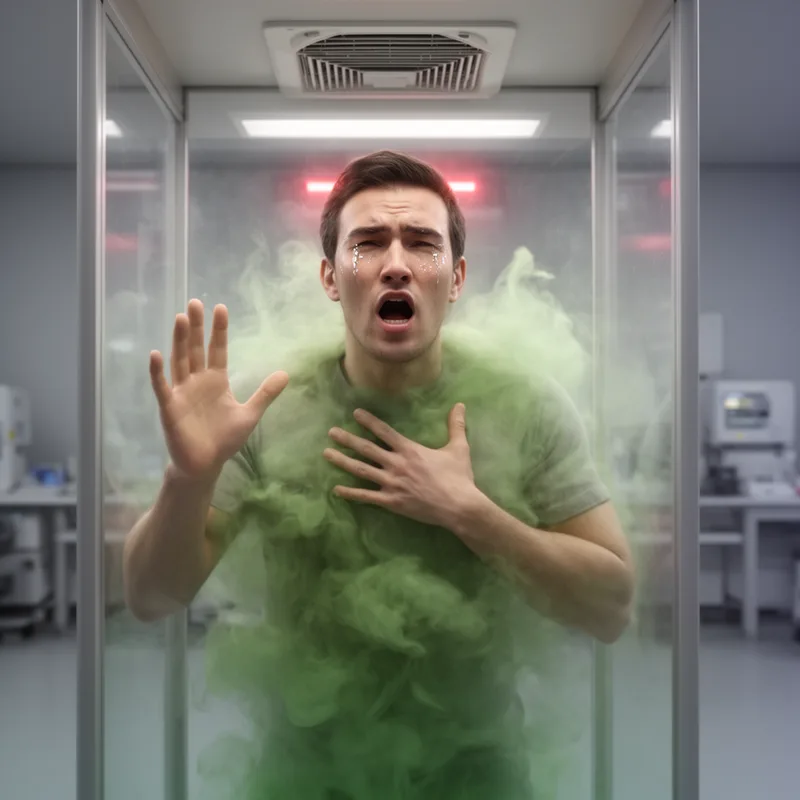
asphyxiating
- adjective
- /æsfɪkˈseɪtɪŋ/
- Specialized
- The thick smoke in the room was asphyxiating, making it hard to breathe.
Examples
-
The novel takes place in an eerie, asphyxiating hospital where the two main characters, a mother and a daughter, are confined among a mass of nameless and silent women.
Academic text (2017) -
During the heat wave, the lack of air circulation made the room feel asphyxiating and uncomfortable.
-
And so at some point this small group of people were slowly starving and asphyxiating and they eventually gave up.
-
The novel takes place in an eerie, asphyxiating hospital where the two main characters, a mother and a daughter, are confined among a mass of nameless and silent women.
Synonyms

 1
5.1
1
5.1

Making it hard to breathe because the air is hot, close, or not fresh
 1
6.6
1
6.6
Air that is unsafe to breathe because of smoke or chemicals

Hot, heavy air that makes it hard to breathe
How Suffocating

Surface Forms
Morphology
asphyxiating = asphyxiate (opaque) = asphyx + iate + ing
The base 'asphyxiate' is not transparently derived from a recognizable English root word.
Etymology
Asphyxiating comes from Greek parts a- meaning 'not' and sphyx meaning 'pulse', so it originally meant 'without a pulse'. That's why something described as asphyxiating cuts off breathing or oxygen and can make you lose your pulse.