
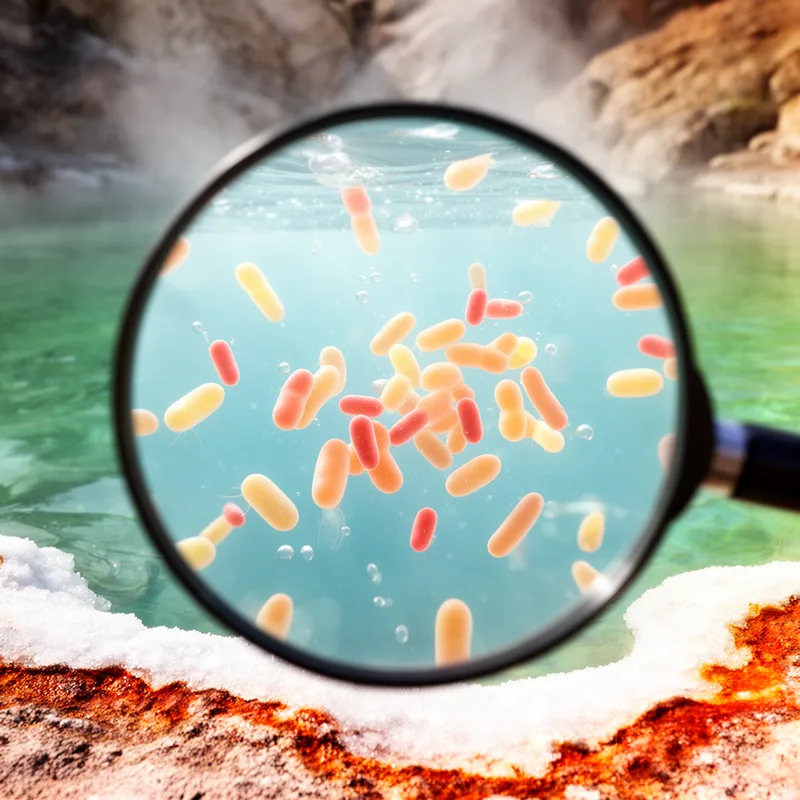
archaebacteria
- noun
- /ˌɑrkēəˈbaktəˌrēə/
- Archaic
 :
arqueobacterias
:
arqueobacterias
- Some archaebacteria are known to survive in extreme conditions, such as deep-sea vents.
Examples
-
Researchers believe that archaebacteria may hold clues to the evolution of life in harsh environments.
-
But the big input funnel is the bacteria and archaebacteria.
Blog text (4) -
After explaining his general outlook on biology in chapters 1 and 2, Harold then gets down in chapter 3 to a detailed consideration of cell types and their organization into eubacteria, archaebacteria, and eukaryotes.
Academic text (2003) -
The study of archaebacteria provides insights into the earliest forms of life on Earth.
Synonyms
 2
9.9
2
9.9

Single-celled living things that often live in extreme places like hot springs or deep ocean vents
Very small, ancient single-celled organisms different from bacteria that live in hot springs or salt lakes
Compounds

- Archaic
A group of single-celled life forms different from bacteria and from animals and plants
Surface Forms
Morphology
Etymology
The word archaebacteria starts with archae-, which means 'ancient', and ends with bacteria, the word for very small living things. So archaebacteria literally means 'ancient bacteria', a helpful way to remember that these are very old types of tiny life that are different from modern bacteria.