
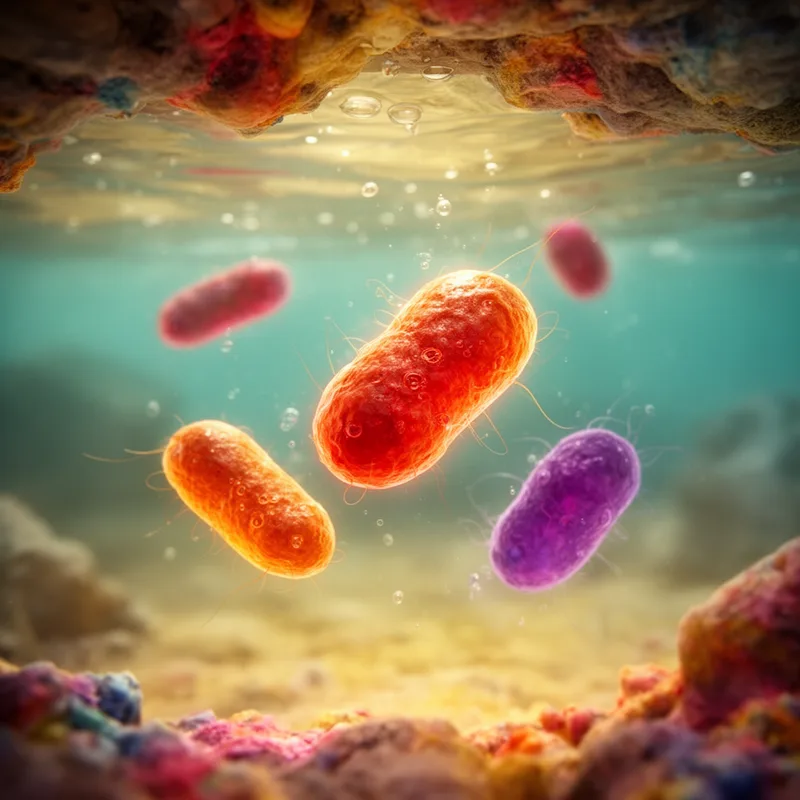
archaeobacteria
- noun
- /ˌɑrkiəʊbækˈtɪəriə/
- Archaic
 :
arqueobacterias
:
arqueobacterias
- Scientists once classified archaeobacteria as a type of bacteria before recognizing their distinct characteristics.
Examples
-
The unique cell membranes of archaeobacteria distinguish them from both bacteria and eukaryotes.
-
An archaeobacterium was discovered in the hot springs of Yellowstone.
-
Recent studies suggest that archaeobacteria thrive in extreme environments such as hot springs and salt lakes.
-
Scientists once classified archaeobacteria as a type of bacteria before recognizing their distinct characteristics.
-
The study of archaeobacteria reveals insights into early life on Earth.
-
Recent studies suggest that archaeobacteria thrive in extreme environments such as hot springs and salt lakes.
-
The study of archaeobacteria reveals insights into early life on Earth.
Synonyms
 2
9.9
2
9.9

Single-celled living things that often live in extreme places like hot springs or deep ocean vents
Very small simple living things that are like early life and often live in hot springs or salty water
Surface Forms
Morphology
Etymology
Archaeobacteria comes from two parts: archaeo- meaning 'ancient' (as in archaeology) and bacteria meaning 'tiny life'. So the name is a helpful memory: these are very old, tiny organisms that look like bacteria but are different in important ways.